
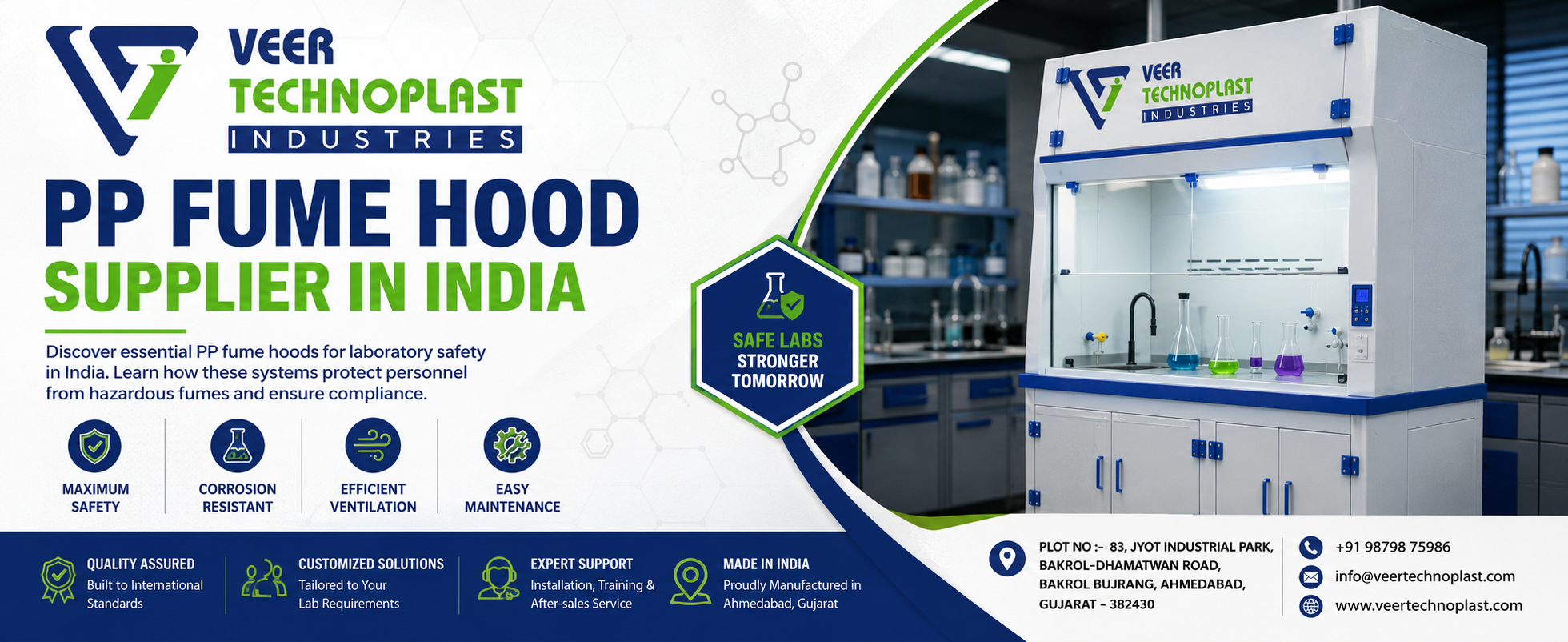
PP Fume Hood supplier in india
Discover essential PP fume hoods for laboratory safety in India. Learn how these systems protect personnel from hazardous fumes and ensure compliance.
Why This Matters in India
India's rapidly expanding pharmaceutical, chemical manufacturing, biotechnology, and research sectors demand stringent safety protocols. As these industries grow, so does the volume and complexity of hazardous materials handled in laboratories. Regulatory bodies are increasingly emphasizing workplace safety and environmental protection, making compliant and efficient fume extraction systems indispensable. Investing in reliable PP fume hoods is not just about meeting regulations; it is about safeguarding human health and ensuring uninterrupted research and production in a dynamic industrial landscape.
What is a PP Fume Hood — Overview
A PP fume hood is a specialized ventilation enclosure designed to protect laboratory personnel from exposure to hazardous fumes, vapors, and dust. Constructed primarily from polypropylene, these hoods offer exceptional resistance to a wide range of corrosive chemicals, acids, and solvents, making them ideal for aggressive laboratory environments. The fundamental principle involves drawing air from the lab into the hood, across the work surface, and then exhausting it safely outside the building or through a filtration system. This continuous airflow creates a barrier, preventing contaminants from escaping into the operator's breathing zone.
Key Features and Technical Specifications
- Corrosion-Resistant Construction: Built from high-grade polypropylene (PP), often reinforced with FRP, ensuring durability against harsh chemicals.
- Efficient Fume Extraction System: Incorporates powerful blowers and ducting to maintain consistent airflow and effectively remove hazardous vapors.
- Adjustable Sash Window: Features a transparent, vertically sliding sash for controlled access, personnel protection, and airflow management.
- Integrated Lighting: Provides clear, shadow-free illumination of the work surface, enhancing visibility during sensitive procedures.
- Chemical-Resistant Work Surface: Typically made from PP, ceramic, or epoxy, designed to withstand spills and simplify cleaning.
- Airflow Monitoring System: Includes gauges or digital displays to continuously monitor face velocity and alert operators to insufficient airflow.
- Ducted or Ductless Configurations: Available in options that either vent directly outside or utilize filtration for recirculated air, depending on application.
- Ergonomic Design: Engineered for comfortable, long-duration use, incorporating utility connections like gas taps, water faucets, and electrical outlets.
Industrial Applications and Use Cases
- Chemical & Reagent Handling: Safely manages the mixing, dispensing, and storage of corrosive acids, bases, and organic solvents.
- Toxic Fume & Vapor Control: Essential for experiments generating harmful gases, aerosols, or particulate matter that require immediate containment.
- Pharmaceutical & Biotechnology Labs: Used in drug discovery, quality control, and research where sterile or controlled environments are critical.
- Educational Institutions: Provides a safe learning environment for students conducting chemistry and science experiments in schools and universities.
- Sample Preparation & Analytical Work: Ideal for tasks like digestion, titration, and filtration that release fumes or require precise environmental control.
- Quality Control (QC) & Research & Development (R&D) Facilities: Supports various testing and development processes requiring fume extraction.
- Microbiology & Life Science Applications: When equipped with appropriate filters, can provide a sterile environment for sensitive biological work.
- Ventilation for Heat-Generating Equipment: Effectively exhausts heat and fumes from instruments like hot plates, ovens, or atomic absorption spectrometers.
How to Choose the Right PP Fume Hood
Selecting an appropriate PP fume hood involves a careful assessment of laboratory needs and operational specifics. Consider the types of chemicals handled, the volume of work, and the required level of containment.
- Chemical Compatibility: Verify that the PP construction is resistant to all chemicals used in the hood.
- Airflow and Ventilation Requirements: Determine the necessary face velocity and exhaust volume based on the toxicity of materials and local safety standards.
- Filtration Needs: Decide between ducted systems for direct exhaust or ductless systems with activated carbon or HEPA filters for specific applications.
- Size and Configuration: Match the hood dimensions and internal layout to the available lab space and the equipment to be placed inside.
- Compliance and Certifications: Ensure the fume hood meets relevant national and international safety standards, such as ASHRAE 110 or EN 14175.
- Supplier Experience and Support: Choose a supplier with a proven track record in manufacturing and installing lab safety equipment, offering reliable after-sales service.
- Customization Options: Assess if the supplier can provide tailored features like additional utility connections, specialized work surfaces, or integrated storage.
Quality Standards and Compliance
Adherence to established quality standards is paramount for PP fume hoods to ensure operator safety and regulatory compliance. Buyers should verify that a supplier's products meet or exceed relevant industry benchmarks. In India, this often includes compliance with specific Indian Standards (IS) for laboratory equipment, alongside international standards such as ASHRAE 110 (for fume hood performance testing) and EN 14175 (European standard for fume cupboards). Certifications like ISO 9001 for quality management indicate a commitment to consistent manufacturing processes. It is essential to confirm that the fume hood's design, materials, and performance specifications align with these standards, ensuring effective containment and safe operation.
Why Company Experience and Capability Matters
The effectiveness and longevity of a PP fume hood depend significantly on the manufacturer's experience and technical capability. Veer Technoplast Industries, located in Ahmedabad, Gujarat, brings a focused approach to engineering and fabricating industrial process equipment, including advanced PP fume hoods. Our manufacturing process emphasizes precision and material integrity, utilizing high-grade polypropylene and FRP composites to ensure maximum corrosion resistance and structural stability. The technical team possesses deep knowledge in airflow dynamics and chemical compatibility, enabling the design of systems that meet specific laboratory demands. We maintain rigorous quality control throughout production, from material selection to final assembly and testing. This commitment extends to offering customized solutions and reliable after-sales support, ensuring that each PP fume hood integrates seamlessly into the client's operations and performs consistently over its lifespan.
Installation, Maintenance and Care Tips
Proper installation and routine maintenance are crucial for the continuous safe operation of any PP fume hood. Incorrect installation can compromise airflow and containment, negating its safety benefits.
- Professional Installation: Ensure the fume hood is installed by qualified technicians who can correctly connect the exhaust ducting, electrical systems, and utility services according to manufacturer guidelines and local codes.
- Ducting Integrity: Regularly inspect the exhaust ducting for any leaks, blockages, or damage that could impede airflow. Ensure proper sealing at all joints.
- Routine Cleaning: Clean the interior work surface and sash regularly with appropriate, non-abrasive chemical cleaners compatible with polypropylene.
- Airflow Monitoring: Periodically check the face velocity using an anemometer or rely on the hood's integrated airflow alarm system to confirm adequate ventilation.
- Filter Replacement: For ductless fume hoods, adhere strictly to the manufacturer's schedule for replacing activated carbon or HEPA filters to maintain filtration efficiency.
- Sash Management: Train users to operate the sash correctly, keeping it at the recommended working height to optimize containment and minimize exposure.
- Annual Servicing: Schedule annual professional servicing to calibrate airflow monitors, inspect mechanical components, and verify overall system performance.
Frequently Asked Questions
The primary benefit of a PP fume hood is to protect laboratory personnel from inhaling hazardous fumes, vapors, and airborne particles generated during experiments or chemical handling. It achieves this by creating a controlled airflow that draws contaminants away from the user and exhausts them safely, significantly reducing the risk of exposure and ensuring a safer working environment.
A PP fume hood ensures safety by maintaining a constant inward airflow across the work surface, effectively capturing and containing hazardous substances. Its corrosion-resistant polypropylene construction prevents degradation from aggressive chemicals, while features like adjustable sashes and airflow alarms provide additional layers of protection, alerting users to potential issues and minimizing direct contact with harmful agents.
PP fume hoods are primarily constructed from high-grade polypropylene due to its exceptional resistance to a wide range of corrosive chemicals, acids, and solvents. In some cases, Fiber Reinforced Plastic (FRP) or HDPE may be integrated for enhanced structural integrity and chemical resistance, ensuring the hood can withstand aggressive laboratory environments over time.
Yes, PP fume hoods can often be customized to meet specific laboratory requirements. Customization options may include varying dimensions, specialized work surfaces, integration of additional utility connections like gas taps or electrical outlets, and specific filtration systems. This flexibility allows labs to optimize their fume hood for unique experimental setups and space constraints.
Regular maintenance for a PP fume hood includes routine cleaning of the interior and sash, periodic inspection of ducting for blockages or damage, and monitoring of airflow performance. For ductless models, timely replacement of filters is crucial. Annual professional servicing is also recommended to calibrate sensors, inspect mechanical parts, and ensure the system operates at peak efficiency and safety standards.
Determining the right size PP fume hood involves assessing the available laboratory space, the dimensions of equipment to be placed inside, and the typical volume of work. Consider the types of experiments conducted and the number of users. Consulting with an experienced supplier can help evaluate these factors and recommend a hood that provides adequate working area and optimal containment without overcrowding the lab.
Conclusion
The selection and implementation of a robust PP fume hood are fundamental to maintaining a safe and productive laboratory environment, particularly in India's evolving industrial landscape. These specialized enclosures offer indispensable protection against hazardous fumes and chemicals, ensuring personnel well-being and regulatory compliance. By carefully considering factors such as material compatibility, airflow requirements, quality standards, and the expertise of your supplier, facilities can invest in a solution that provides long-term safety and operational efficiency. Choosing a knowledgeable partner ensures that your laboratory is equipped with reliable, high-performance ventilation systems designed for the demands of modern chemical handling.
Get In Touch
Veer Technoplast Industries