
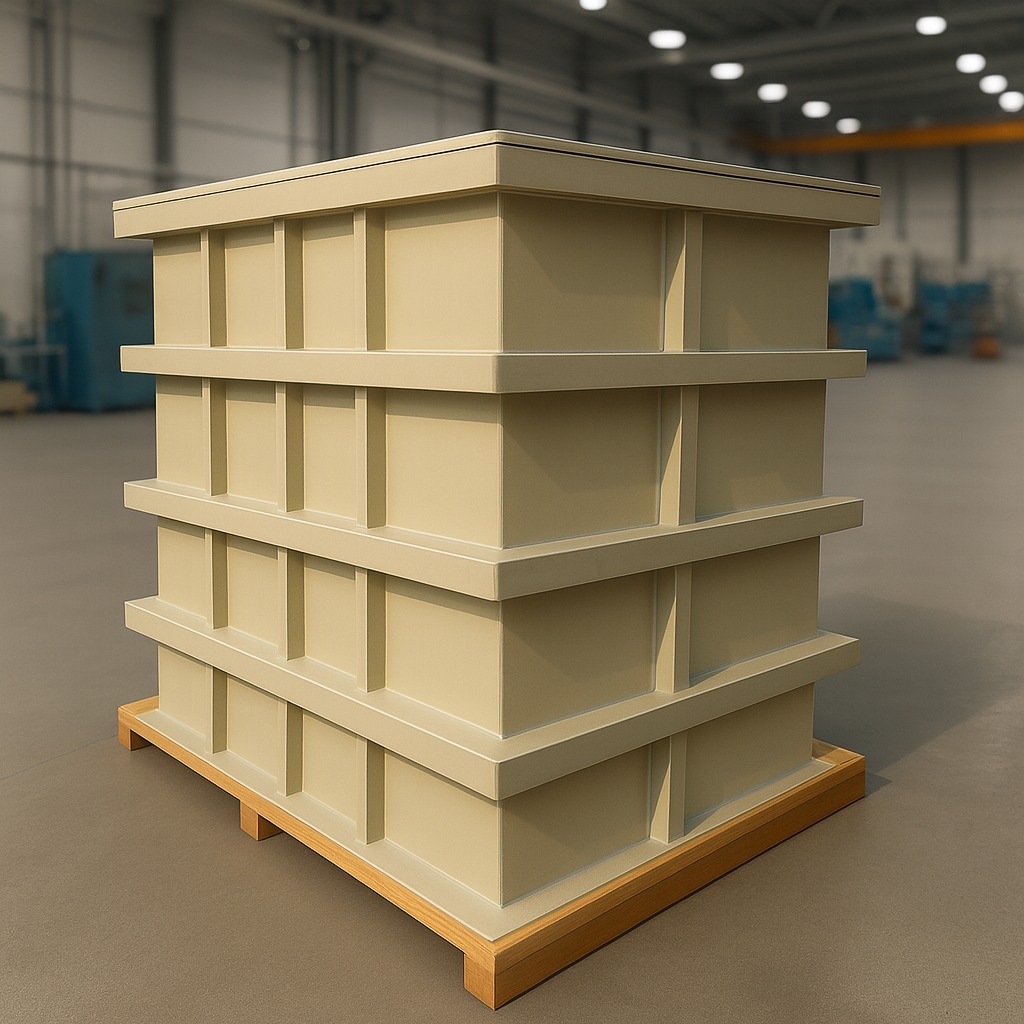
advantages of PP tanks over other materials
When it comes to storing liquids, especially corrosive chemicals or sensitive substances, the choice of tank material is paramount. While various options exist, such as stainless steel, fiberglass reinforced plastic (FRP), and high-density polyethylene (HDPE), Polypropylene (PP) tanks consistently emerge as a highly advantageous solution. VEER TECHNOPLAST INDUSTRIES understands the critical role material selection plays in tank longevity, safety, and operational efficiency. This guide explores the compelling advantages of PP tanks over other common materials, helping you make an informed decision for your specific industrial needs.
Understanding Polypropylene (PP) Tanks
Polypropylene (PP) is a versatile thermoplastic polymer widely used across various industries due to its unique combination of properties. PP tanks are fabricated by joining sheets of PP through specialized welding techniques, creating a seamless and robust structure. This material offers excellent resistance to a broad spectrum of chemicals, making it ideal for applications involving acids, alkalis, solvents, and other aggressive media that would corrode conventional materials.
Unlike some other plastics, PP exhibits good mechanical strength and stiffness, maintaining its structural integrity even under load. It also boasts a relatively high melting point, allowing for use in moderately elevated temperature applications. These intrinsic qualities form the foundation of the many advantages PP tanks offer.
Advantages of PP Tanks Over Steel Tanks
Steel tanks, particularly stainless steel, are often considered for their strength and durability. However, PP tanks present several key advantages:
- Corrosion Resistance: This is perhaps the most significant advantage. Steel, even stainless steel, can be susceptible to corrosion, especially when exposed to specific chemicals, moisture, or environmental conditions. Rusting and pitting can compromise the tank's integrity and contaminate the stored product. PP, on the other hand, is inherently inert to most acids, alkalis, salts, and organic solvents, offering superior long-term protection against degradation.
- Weight: PP tanks are significantly lighter than steel tanks of comparable capacity. This translates to easier transportation, handling, and installation, often without the need for heavy lifting equipment, thereby reducing project costs and timelines.
- Cost-Effectiveness: While the initial cost can vary, PP tanks often prove more cost-effective over their lifespan. Their resistance to corrosion eliminates the need for costly protective coatings or linings that are frequently required for steel tanks, especially in harsh environments. Furthermore, reduced maintenance and longer service life contribute to a lower total cost of ownership.
- Maintenance: Steel tanks may require regular inspection for rust, corrosion, and potential leaks, along with periodic repainting or specialized treatments. PP tanks, due to their inert nature, typically require minimal maintenance beyond routine cleaning and occasional visual inspection.
Advantages of PP Tanks Over FRP Tanks
Fiberglass Reinforced Plastic (FRP) tanks are another common choice, known for their strength and chemical resistance. However, PP tanks offer distinct benefits:
- Superior Chemical Resistance: While FRP offers good chemical resistance, certain aggressive chemicals, particularly strong acids and solvents, can degrade the resin matrix over time, leading to delamination or structural weakening. PP's molecular structure provides more uniform and predictable resistance to a wider array of aggressive chemicals, ensuring greater reliability for demanding applications.
- Seamless Construction: High-quality PP tanks are typically manufactured using extrusion welding, creating a truly monolithic and leak-proof structure. Some FRP tanks, depending on their construction method, might have joints or interfaces that could be potential weak points for leakage or chemical attack over extended periods.
- Purity of Stored Product: The inert nature of PP makes it an excellent choice for applications where product purity is critical, such as in the pharmaceutical, food, or high-purity water industries. PP is less likely to leach contaminants into the stored medium compared to some resins used in FRP construction.
- Impact Resistance: PP generally offers better impact resistance than many standard FRP formulations, making it more resilient to accidental bumps or physical damage during handling or operation.
Advantages of PP Tanks Over HDPE Tanks
High-Density Polyethylene (HDPE) is also a popular plastic for tanks. While it shares some benefits with PP, PP tanks often have the edge in specific areas:
- Temperature Resistance: PP has a higher service temperature limit than HDPE. This means PP tanks can be used in applications where the stored liquid or ambient temperature is moderately elevated, without risking deformation or loss of structural integrity.
- Stiffness and Rigidity: PP is generally stiffer and more rigid than HDPE. This allows for the design of tanks that can better withstand external loads or pressures, and they may require less external support for larger capacities.
- UV Resistance: While both materials can be enhanced with UV stabilizers, PP formulations often provide better long-term resistance to UV degradation when properly formulated, making them more suitable for outdoor installations.
- Weldability and Repair: PP offers excellent weldability, allowing for robust joints and relatively easy repairs if damage occurs.
Key Applications and Use Cases for PP Tanks
The exceptional properties of PP tanks lend themselves to a wide range of industrial applications:
Water & Wastewater Treatment
Storage of process water, effluent, chemicals used in treatment (e.g., coagulants, disinfectants).
Chemical Processing & Storage
Handling of acids (sulfuric, hydrochloric), alkalis (caustic soda), solvents, and various intermediate chemicals.
Manufacturing & Industrial Processes
Plating baths, etching solutions, rinse water tanks, and process fluid containment.
Food & Beverage Industry
Storage of ingredients, processing aids, brines, and sanitary water (requires food-grade PP).
Power Generation
Demineralized water storage, cooling tower water treatment, and chemical dosing systems.
Laboratories & Research
Holding tanks for reagents, waste solutions, and process chemicals in R&D settings.
Choosing the Right PP Tank: Key Considerations
Selecting the optimal PP tank involves understanding your specific operational requirements. VEER TECHNOPLAST INDUSTRIES advises considering the following:
Material Grade and Additives
Ensure the PP grade is suitable for your application. For outdoor use, UV-stabilized grades are essential. For specific chemical compatibility, consult expert data.
Capacity and Dimensions
Determine the required storage volume and available space. Tanks can be cylindrical, rectangular, or custom-designed.
Temperature and Pressure Ratings
Verify that the tank’s operating temperature and any potential pressure conditions are within the material's capabilities.
Connectivity and Accessories
Plan for necessary inlets, outlets, overflows, vents, and access manways. Ensure compatibility with your piping system.
Regulatory Compliance
Check if the tank material and construction meet any industry-specific standards or local regulations for your application.
Ensuring Quality: VEER TECHNOPLAST INDUSTRIES' Approach
At VEER TECHNOPLAST INDUSTRIES, we prioritize quality and reliability in every tank we manufacture. Our commitment involves:
- Premium Material Selection: We source high-grade Polypropylene materials known for their excellent chemical resistance and mechanical properties.
- Advanced Fabrication Techniques: Utilizing state-of-the-art extrusion welding processes ensures strong, seamless, and leak-proof joints for maximum durability and safety.
- Rigorous Quality Control: Each tank undergoes stringent quality checks throughout the manufacturing process, from raw material inspection to final product testing, ensuring adherence to specifications.
- Customization Expertise: We work closely with clients to understand their unique requirements, offering tailored solutions with specific dimensions, fittings, and features.
Our focus is on delivering robust, long-lasting PP tanks that provide exceptional value and performance for your industrial operations.
Frequently Asked Questions About PP Tanks
What makes PP tanks better than steel for chemical storage?
PP tanks offer superior corrosion resistance to a wider range of chemicals than steel, are lighter, more cost-effective over their lifespan due to lower maintenance, and do not rust or pit, preventing product contamination.
Can PP tanks handle high temperatures?
PP tanks can handle moderately elevated temperatures, generally higher than HDPE but lower than steel. The specific temperature limit depends on the PP grade and the applied load. It's crucial to confirm the operating temperature range for your specific application.
Are PP tanks suitable for outdoor use?
Yes, when manufactured with UV-stabilized PP grades, they offer excellent resistance to sunlight and weathering, making them suitable for long-term outdoor installations.
How do PP tanks compare to FRP tanks in terms of chemical resistance?
While FRP is resistant to many chemicals, PP often provides more consistent and broader resistance to aggressive acids, alkalis, and solvents without the risk of resin degradation or delamination over time. PP tanks are also typically seamless.
What is the typical lifespan of a PP tank?
With proper selection for the application, correct installation, and regular inspection, PP tanks can offer a service life of 15-25 years or even longer, especially when compared to coated steel tanks or tanks made from less resistant plastics.
Ready to Select Your Ideal PP Tank Solution?
Experience the advantages of high-performance Polypropylene tanks for your industrial storage needs. VEER TECHNOPLAST INDUSTRIES offers expertise in designing and fabricating robust, chemically resistant PP tanks tailored to your exact specifications. Contact us today to discuss your project and receive a personalized solution.
Request a Consultation