
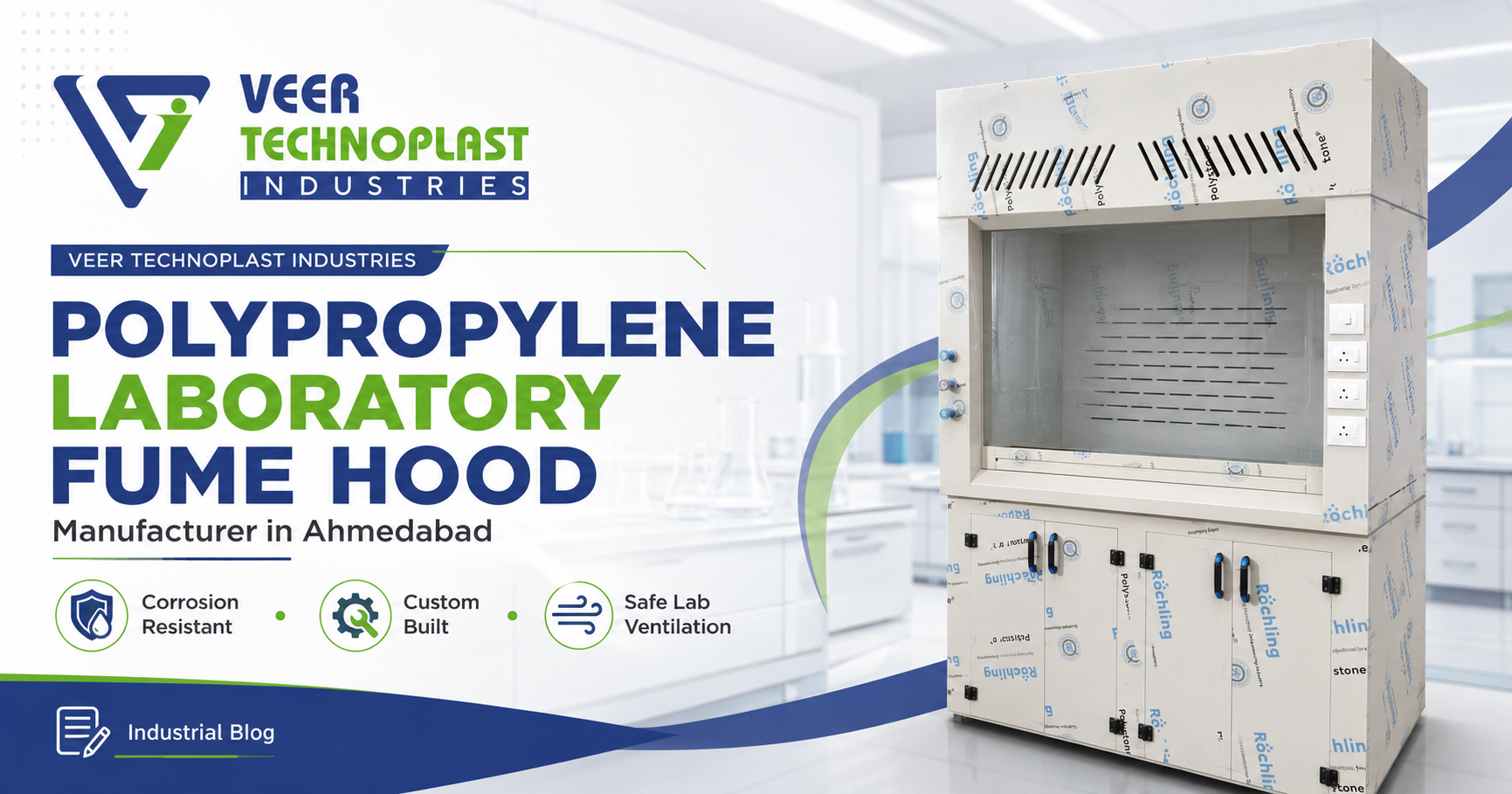
Polypropylene Laboratory Fume Hood manufacturer
Expert Polypropylene (PP) laboratory fume hood manufacturer in Ahmedabad. Custom-built, corrosion-resistant fume hoods for safe lab environments. Get a quote.
What is a Polypropylene Laboratory Fume Hood? — Overview
A Polypropylene (PP) laboratory fume hood is a specialized ventilation enclosure designed to capture and exhaust hazardous fumes, gases, and airborne particles generated during laboratory procedures. Constructed from chemically resistant polypropylene, these hoods create a physical barrier between the user and the hazardous substances. Air is drawn into the hood from the laboratory and then exhausted safely outside, typically through a ducting system, preventing the buildup of dangerous concentrations within the workspace. This controlled airflow ensures a safer working environment for chemists, researchers, and technicians.
Key Features and Technical Specifications
- Material Construction: Fabricated from 100% virgin, high-grade Polypropylene (PP) sheets known for their excellent chemical resistance and mechanical strength.
- Corrosion Resistance: Inherently resistant to a broad spectrum of acids, alkalis, solvents, and other corrosive chemicals, ensuring longevity in harsh environments.
- Seamless Fabrication: Utilizes advanced welding techniques to create a monolithic structure, eliminating seams and potential leak points for maximum containment.
- Integrated Work Surface: Features a smooth, non-porous, and chemically inert work surface that is easy to clean and decontaminate.
- Aerodynamic Design: Engineered for optimal airflow dynamics, ensuring efficient capture of fumes at the sash opening and minimizing air turbulence within the hood.
- Durable Sash: Equipped with a robust, transparent sash (often made of toughened glass or polycarbonate) that can be easily raised and lowered for access and protection.
- Built-in Service Fixtures: Can be customized with provisions for gas lines, electrical outlets, water supply, and drainage as per specific laboratory requirements.
- Modular Design: Allows for flexibility in size and configuration to fit various laboratory layouts and specific application needs.
Industrial Applications and Use Cases
- Chemical Research & Development: Safely handling volatile organic compounds (VOCs), strong acids, and reactive chemicals during synthesis and analysis.
- Pharmaceutical Laboratories: Containing airborne contaminants and hazardous vapors generated during drug discovery, quality control testing, and formulation.
- Educational Institutions: Providing a safe environment for students and educators performing experiments in chemistry and biology labs.
- Metal Finishing & Electroplating: Exhausting corrosive fumes from pickling, anodizing, and electroplating processes.
- Water Treatment Facilities: Managing potentially hazardous gases released during water analysis and chemical treatment procedures.
- Forensic Laboratories: Containing and ventilating trace evidence analysis and chemical testing processes.
- Food & Beverage Quality Control: Ensuring a safe environment for analyzing food components and processing additives.
- Industrial Hygiene Monitoring: Capturing and containing airborne samples and hazardous substances during workplace air quality assessments.
How to Choose the Right Polypropylene Laboratory Fume Hood
Selecting the appropriate fume hood is critical for laboratory safety and operational efficiency. Consider these factors:
- Chemical Compatibility: Assess the types of chemicals you will be using. Polypropylene offers broad resistance, but specific applications might require verification.
- Size and Capacity: Determine the required internal working space and the volume of air that needs to be exhausted. Consider the dimensions of your laboratory and the equipment you will place inside.
- Airflow Requirements: Consult relevant safety standards (e.g., ASHRAE, ANSI/AIHA) for required face velocity and airflow patterns to ensure effective containment.
- Sash Type and Operation: Decide between vertical or horizontal sliding sashes, or combination units, based on ease of use and the need for full-width access.
- Service Fixtures: List any specific requirements for gas, water, electrical, or vacuum connections within the hood.
- Exhaust System Integration: Ensure the hood is compatible with your existing or planned exhaust ducting and blower system.
- Manufacturer's Expertise: Choose a manufacturer with proven experience in fabricating high-quality, custom PP fume hoods and a strong understanding of laboratory safety requirements.
- After-Sales Support: Inquire about installation assistance, maintenance services, and warranty provisions.
Quality Standards and Compliance
When selecting a Polypropylene Laboratory Fume Hood manufacturer, it is essential to ensure their products meet stringent quality standards and comply with relevant safety regulations. Reputable manufacturers will adhere to industry best practices for fabrication and performance. While specific certifications for fume hoods can vary by region, look for manufacturers who can demonstrate adherence to standards related to material quality (e.g., using virgin PP), construction integrity (e.g., robust welding), and performance (e.g., airflow characteristics). Verification of material traceability and proper fabrication techniques is key to ensuring the fume hood will provide reliable protection against hazardous substances.
Why Veer Technoplast Industries' Experience and Capability Matters
At Veer Technoplast Industries, our extensive experience in manufacturing Polypropylene (PP) laboratory fume hoods is built on a foundation of technical expertise and a deep understanding of laboratory safety needs. We utilize only 100% virgin raw materials, ensuring the inherent chemical resistance and structural integrity of every unit we produce. Our fabrication process employs advanced welding technologies, creating seamless, leak-proof constructions that offer superior containment. We pride ourselves on our ability to provide custom-built solutions, tailoring each fume hood to the specific dimensions, service requirements, and operational demands of our clients in Ahmedabad and beyond. Our dedicated team of engineers and fabricators ensures meticulous quality control at every stage, from design to final inspection, guaranteeing products that are not only durable and safe but also meet the highest industry expectations.
Installation, Maintenance, and Care Tips
Proper installation and regular maintenance are crucial for the optimal performance and longevity of your Polypropylene Laboratory Fume Hood.
- Installation: Ensure the fume hood is installed on a stable, level surface. Connect the exhaust ducting securely to the hood collar and the external exhaust system, ensuring no leaks. All service fixtures (gas, electrical, water) should be installed by qualified professionals according to local codes.
- Initial Testing: After installation, verify the face velocity at the sash opening to ensure it meets the required safety standards. Test all service fixtures for proper operation.
- Daily Checks: Before each use, check that the exhaust system is operational and that airflow is satisfactory. Ensure the sash moves freely.
- Regular Cleaning: Clean the interior surfaces, work surface, and sash regularly with a mild detergent and water. Avoid abrasive cleaners or solvents that could damage the polypropylene.
- Periodic Inspections: Schedule periodic inspections (e.g., annually) by a qualified technician to check for any signs of wear, damage, or leaks in the hood structure, seals, or ductwork.
- Sash Care: Keep the sash clean and free from chemical residues. Ensure it is lowered to the appropriate working height during operation to maintain containment.
- Blower System Maintenance: Regularly maintain the exhaust blower system according to the manufacturer's recommendations to ensure adequate airflow.
Frequently Asked Questions
The primary benefit of a PP fume hood is its exceptional resistance to a wide range of corrosive chemicals, acids, and alkalis, making it ideal for laboratories handling aggressive substances where other materials might degrade.
The correct size depends on the available bench space, the number and size of equipment you intend to place inside, and the specific experimental procedures. It's advisable to consult with the manufacturer to assess your needs and available options.
Industry standards typically recommend a face velocity of 80 to 120 feet per minute (fpm) at the sash opening to ensure effective containment of hazardous fumes. However, specific applications may have different requirements.
Yes, Polypropylene fume hoods are highly customizable. Manufacturers can incorporate specific dimensions, service fixtures (like gas, water, electrical outlets), specialized ducting connections, and different sash configurations to meet unique laboratory requirements.
Regular cleaning of surfaces, daily checks of airflow, and periodic professional inspections for structural integrity and exhaust system performance are essential. Avoid using harsh abrasives that could damage the material.
While PP offers excellent resistance to many chemicals, it's crucial to verify compatibility with extremely aggressive solvents or specific reactive compounds. Consulting the manufacturer's chemical resistance chart or discussing your specific chemical usage is recommended.
Conclusion
For laboratories in Ahmedabad and across Gujarat, investing in a high-quality Polypropylene Laboratory Fume Hood is a critical step towards ensuring a safe, compliant, and productive research environment. The inherent chemical resistance, durability, and customizability of PP make it an ideal material for containing hazardous fumes. When selecting a manufacturer, prioritize experience, quality of materials, fabrication expertise, and a commitment to providing tailored solutions. By carefully considering your specific needs and partnering with a reputable provider like Veer Technoplast Industries, you can secure a fume hood that offers reliable protection and long-term value for your laboratory operations.
Get In Touch
Veer Technoplast Industries