
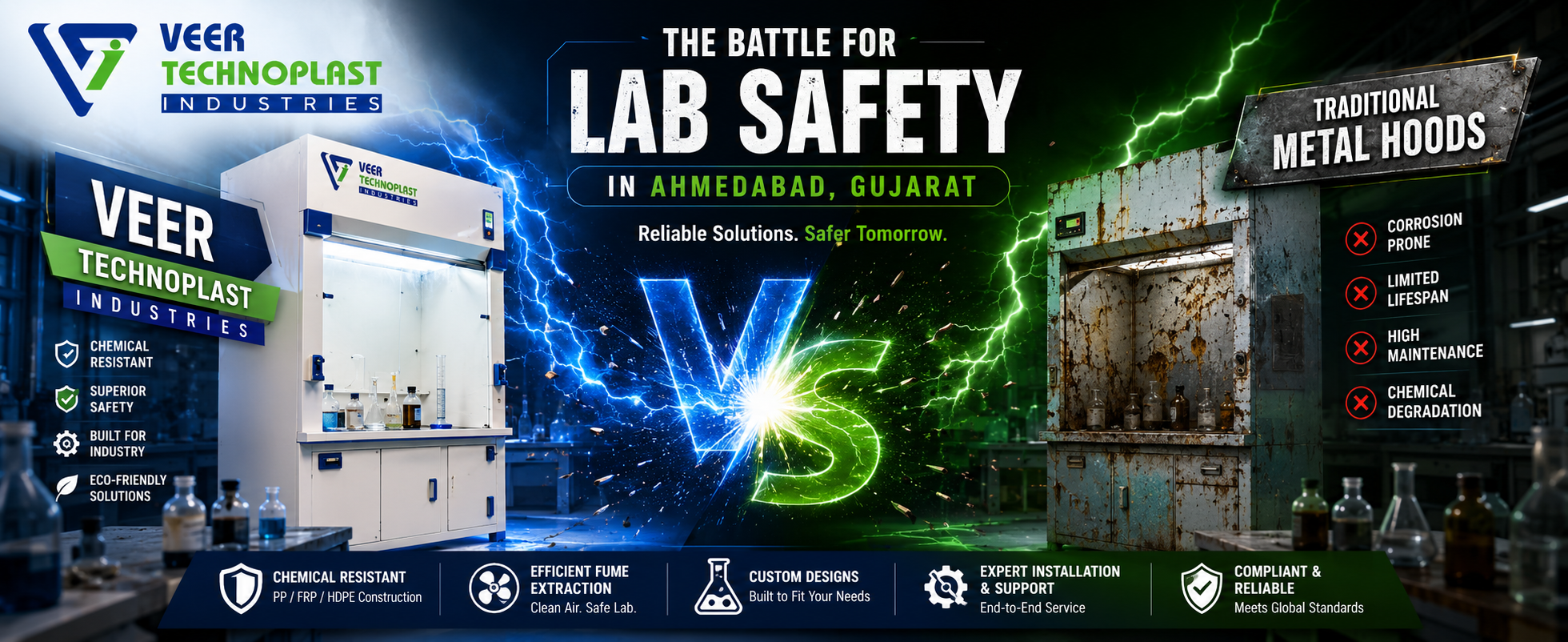
non metalic fume hood
Ensure lab safety with durable non metallic fume hoods from Veer Technoplast Industries in Ahmedabad. Designed for chemical resistance and efficient fume extrac
Why This Matters in Ahmedabad, Gujarat
Ahmedabad and the broader Gujarat region are significant hubs for chemical, pharmaceutical, biotechnology, and educational industries. These sectors inherently rely on extensive laboratory work, from research and development to quality control and production support. The presence of numerous manufacturing plants and academic institutions creates a constant demand for reliable and safe laboratory infrastructure. Investing in the right non metallic fume hood ensures compliance with safety regulations and fosters a productive, hazard-free working environment crucial for the region's continued industrial growth.
What is a Non Metallic Fume Hood — Overview
A non metallic fume hood is a specialized ventilation enclosure designed to protect laboratory personnel from exposure to hazardous fumes, vapors, and dust. Unlike traditional metal hoods, these units are constructed from corrosion-resistant polymers such as Polypropylene (PP), High-Density Polyethylene (HDPE), or Fiber-Reinforced Plastic (FRP). This material choice makes them exceptionally suitable for applications involving aggressive acids, bases, and solvents that would quickly degrade metallic counterparts. The hood draws contaminated air away from the work area, filters it if necessary, and exhausts it safely outside the building, maintaining a controlled and safe atmosphere within the laboratory.
Key Features and Technical Specifications
Non metallic fume hoods are engineered with specific attributes to meet stringent laboratory safety and operational demands. Their design focuses on containment, material integrity, and user functionality.
- Corrosion-Resistant Construction: Primarily built from PP, FRP, HDPE, or PP+FRP composites, ensuring resistance to a wide spectrum of aggressive chemicals, acids, and solvents.
- Efficient Fume Extraction System: Incorporates powerful blowers and optimized airflow designs to effectively capture and remove hazardous vapors and airborne particulates from the work zone.
- Adjustable Face Velocity: Designed to maintain a consistent and adjustable face velocity across the sash opening, adhering to standard laboratory ventilation guidelines for optimal containment.
- Integrated Lighting: Features energy-efficient LED lighting systems that provide clear, shadow-free illumination of the work surface, enhancing visibility during sensitive procedures.
- Smooth, Non-Reactive Interior Surfaces: The internal lining is typically smooth and non-porous, facilitating easy cleaning and preventing chemical residue buildup or cross-contamination.
- Ducted and Ductless Configurations: Available in both ducted systems, which exhaust fumes outside, and ductless systems, which filter and recirculate air, depending on the application and chemical type.
- Enhanced Safety Features: Includes features like sash windows for barrier protection, airflow alarms to indicate insufficient ventilation, and adjustable work openings for ergonomic use.
- Ducting Compatibility: Engineered to seamlessly integrate with PP, HDPE, and FRP ducting systems, ensuring a fully corrosion-resistant ventilation pathway from hood to exhaust.
- Optional Utility Add-Ons: Can be equipped with various utilities such as sinks, gas taps, electrical sockets, reagent shelves, and drainage systems to enhance functionality.
- Compliance with Standards: Manufactured to meet relevant laboratory safety and fume extraction standards, ensuring reliable performance and regulatory adherence.
Industrial Applications and Use Cases
The versatility and chemical resistance of non metallic fume hoods make them indispensable across numerous industrial and research settings. They are critical for maintaining safety and operational integrity in diverse applications.
- Chemical and Reagent Handling: Safely manages the mixing, pouring, and transfer of corrosive chemicals, acids, and solvents, protecting personnel from direct exposure.
- Toxic Fume and Vapor Control: Essential for experiments and processes that generate harmful fumes, aerosols, or volatile organic compounds, ensuring their effective capture and removal.
- Pharmaceutical, Biotechnology, and Chemical Laboratories: Provides a controlled environment for R&D, quality control, and analytical work in industries dealing with sensitive and hazardous substances.
- Educational Institutions: Widely used in university and college chemistry labs, allowing students to conduct experiments safely while learning proper laboratory practices.
- Sample Preparation and Analytical Work: Ideal for tasks such as titration, digestion, filtration, and other analytical procedures where precise conditions and fume containment are required.
- Quality Control (QC) and Research & Development (R&D) Laboratories: Supports critical testing and development activities across various industries, ensuring product quality and innovation without compromising safety.
- Microbiology and Life Science Applications: When equipped with appropriate filters, these hoods can provide a clean, contamination-free workspace for certain biological applications.
- Ventilation for Heat-Generating Equipment: Offers effective ventilation for instruments that produce heat, preventing temperature buildup and maintaining stable operating conditions.
- Acid Etching and Plating Processes: Crucial for industries involved in surface treatment, where strong acids are used for etching, pickling, or electroplating, containing highly corrosive fumes.
How to Choose the Right Non Metallic Fume Hood
Selecting the appropriate non metallic fume hood involves careful consideration of several factors to ensure it meets specific laboratory requirements and safety protocols. A thoughtful approach helps in making a sound investment.
- Assess Chemical Compatibility: Identify the specific chemicals, acids, and solvents that will be used. Ensure the hood's construction materials (PP, FRP, HDPE) are fully resistant to these substances.
- Determine Airflow and Ventilation Needs: Consider the volume and toxicity of fumes generated. This will dictate the required face velocity, airflow capacity, and whether a ducted or ductless system is more suitable.
- Verify Compliance and Certifications: Confirm that the fume hood meets relevant national and international safety standards, such as ASHRAE 110, EN 14175, or local regulatory requirements.
- Evaluate Supplier Experience and Reputation: Partner with a manufacturer or supplier known for their expertise in laboratory ventilation systems, proven product quality, and reliable after-sales support.
- Consider Customization Options: Assess if the supplier can tailor the fume hood's dimensions, utility services (gas, water, electrical), and internal configurations to fit your laboratory's unique layout and operational needs.
- Review Installation and Maintenance Support: Understand the installation process, warranty terms, and the availability of maintenance services, including filter replacement and system checks.
- Examine Ergonomics and User Interface: Look for features that enhance user comfort and ease of operation, such as smooth sash movement, clear controls, and sufficient workspace.
Quality Standards and Compliance
Adherence to established quality standards and compliance protocols is non-negotiable for laboratory safety equipment like non metallic fume hoods. Buyers must verify that the chosen system meets recognized benchmarks for performance, material integrity, and personnel protection. Key standards often include ASHRAE 110 for fume hood performance testing, which evaluates containment efficiency, and EN 14175, a European standard for fume cupboards. Additionally, local industrial safety regulations and environmental guidelines in regions like Gujarat must be considered for exhaust systems and emissions. A reputable manufacturer will provide documentation and certifications proving their products meet these critical requirements, ensuring a safe and compliant laboratory environment.
Why Company Experience and Capability Matters
The effectiveness and longevity of a non metallic fume hood depend significantly on the manufacturer's experience and technical capability. A company with a deep understanding of material science, airflow dynamics, and laboratory safety can deliver solutions that perform reliably under demanding conditions. Veer Technoplast Industries, located in Ahmedabad, possesses the manufacturing expertise to produce robust non metallic fume hoods from materials like PP, HDPE, and FRP. Our technical team is skilled in designing systems that ensure optimal fume extraction and chemical resistance. We focus on stringent quality control throughout the production process, from material selection to final assembly. This capability allows for customization to specific laboratory layouts and operational requirements, ensuring reliable delivery and comprehensive after-sales support.
Installation, Maintenance and Care Tips
Proper installation and consistent maintenance are crucial for the long-term performance and safety of any non metallic fume hood. Incorrect setup can compromise its effectiveness, while neglect can lead to system failure.
- Professional Installation: Always engage experienced technicians for installation. They ensure correct ducting connections, proper electrical wiring, and precise leveling, which are vital for optimal airflow and containment.
- Regular Cleaning: Clean the interior surfaces of the fume hood regularly using appropriate, non-abrasive cleaning agents compatible with PP, HDPE, or FRP. This prevents chemical buildup and maintains surface integrity.
- Sash Management: Keep the sash at the recommended operating height during experiments. When not in use, close the sash completely to conserve energy and provide a physical barrier.
- Airflow Monitoring: Regularly check the airflow monitor or alarm system to ensure the hood is operating within safe face velocity parameters. Any alarms should be addressed immediately.
- Filter Replacement (Ductless Hoods): For ductless models, adhere strictly to the manufacturer's schedule for replacing activated carbon or HEPA filters. Used filters must be disposed of according to hazardous waste protocols.
- Annual Certification: Schedule annual performance testing and certification by qualified professionals. This verifies the hood's containment capabilities and ensures ongoing compliance with safety standards.
- Ductwork Inspection: Periodically inspect the external ductwork for any signs of corrosion, leaks, or obstructions that could impede airflow.
Frequently Asked Questions
Non metallic fume hoods offer superior resistance to corrosive chemicals, acids, and bases compared to their metallic counterparts. They are typically constructed from materials like PP, FRP, or HDPE, which do not rust or degrade under harsh chemical exposure. This makes them ideal for laboratories handling aggressive substances, ensuring a longer lifespan and consistent safety performance. Their lighter weight can also simplify installation and structural considerations in some lab settings.
The most common materials for non metallic fume hoods include Polypropylene (PP), Fiber-Reinforced Plastic (FRP), and High-Density Polyethylene (HDPE). PP is known for its excellent chemical resistance and ease of fabrication. FRP offers high strength and stiffness, suitable for larger hoods or those requiring enhanced structural integrity. HDPE provides good chemical resistance and impact strength. Often, a combination like PP+FRP is used to leverage the benefits of both materials.
The replacement frequency for filters in a ductless non metallic fume hood depends on several factors, including the type and volume of chemicals used, the duration of operation, and the specific filter media. Manufacturers typically provide guidelines, but it's crucial to monitor saturation indicators or airflow alarms. Regular checks and adherence to a scheduled replacement plan, often every 6-12 months, are essential to maintain filtration efficiency and ensure continued safety.
Face velocity refers to the average speed of air moving into the fume hood opening (sash) when the sash is at its operational height. It is a critical parameter for ensuring proper containment of hazardous fumes. A sufficient face velocity, typically between 80-120 feet per minute (FPM), prevents fumes from escaping into the laboratory environment. Too low a velocity compromises safety, while too high a velocity can create turbulence and reduce containment effectiveness.
Yes, non metallic fume hoods are highly customizable to meet the unique needs of different laboratories. Customization options often include specific dimensions to fit available space, integration of various utility services like gas, water, and electrical outlets, and specialized work surfaces. Manufacturers can also incorporate unique internal configurations, additional storage cabinets, or specific filtration systems to accommodate particular experimental setups or chemical handling protocols.
Buyers should prioritize several key safety features. A robust sash window, ideally made of tempered glass or polycarbonate, provides a physical barrier and allows visibility. An airflow alarm system is crucial to alert users of insufficient ventilation. Integrated lighting ensures clear visibility without shadows. Chemical-resistant interior surfaces prevent degradation and cross-contamination. Finally, an ergonomic design that allows comfortable and safe operation for extended periods is also important.
Conclusion
Selecting the right non metallic fume hood is a foundational decision for any laboratory prioritizing safety and operational efficiency, especially within the demanding industrial landscape of Ahmedabad, Gujarat. These specialized hoods, constructed from advanced polymers, offer unparalleled resistance to corrosive chemicals, ensuring long-term performance and robust protection for personnel. By focusing on critical factors such as material compatibility, adherence to quality standards, and the proven capability of the supplier, laboratories can make an informed choice. A well-chosen and properly maintained non metallic fume hood is an investment in a safer, more productive research and development environment.
Get In Touch
Veer Technoplast Industries