
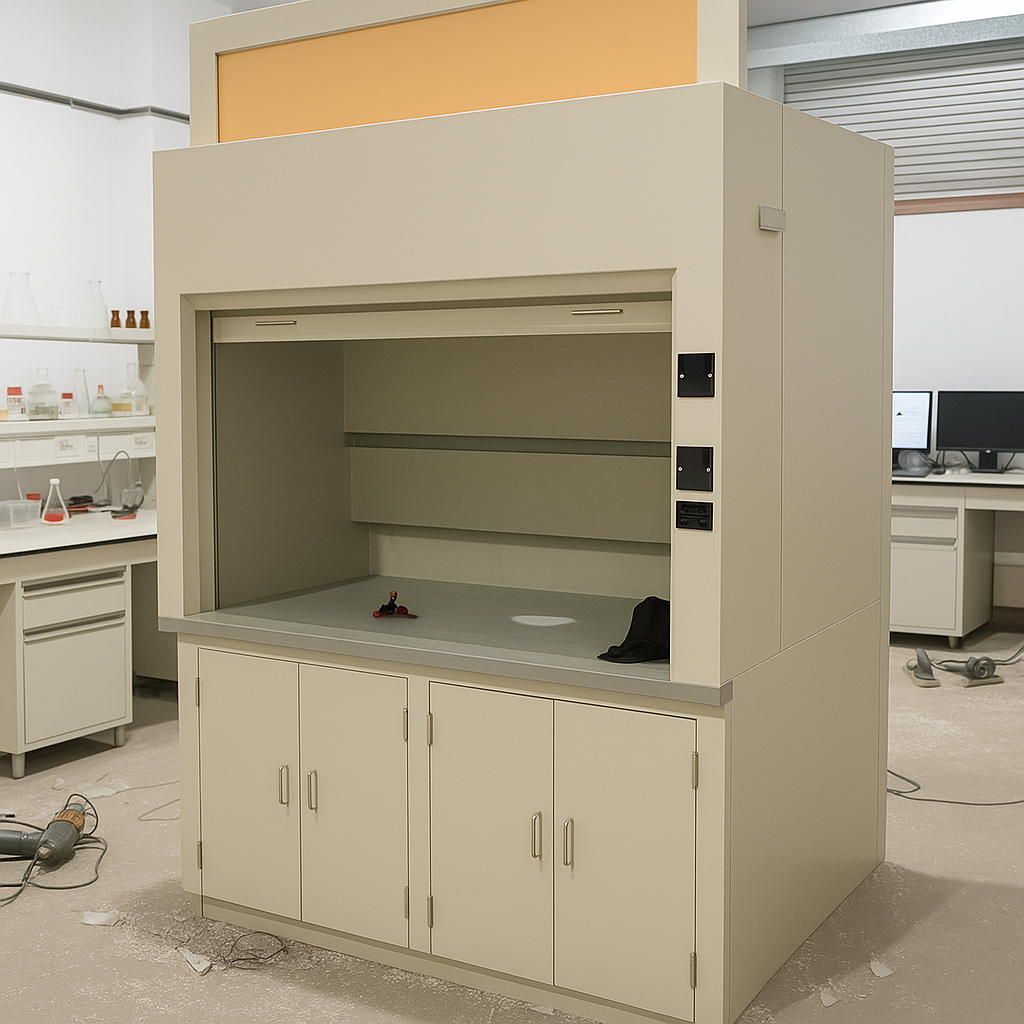
Chemical Fume Hood manufacturer in ahmedabad
Ensuring a safe working environment is paramount in any setting where hazardous fumes, gases, or vapors are present. Chemical fume hoods are indispensable pieces of equipment designed to capture and remove these airborne contaminants, protecting personnel and preventing the spread of hazardous substances. For industries and laboratories in Ahmedabad seeking reliable containment solutions, understanding the function, benefits, and selection of fume hoods is crucial.
Understanding Chemical Fume Hoods: Your First Line of Defense
A chemical fume hood, often referred to as a fume cupboard or laboratory hood, is a ventilated enclosure that protects users from inhaling hazardous vapors, fumes, and dusts. It works by drawing air from the laboratory or workspace into the hood and then exhausting it outside or through a filtration system. This continuous airflow creates a barrier, preventing contaminants from entering the user's breathing zone.
The primary function is containment and removal. Whether dealing with volatile organic compounds (VOCs) in a pharmaceutical lab, corrosive acids in a metal finishing plant, or toxic gases in a research facility, the fume hood serves as a critical safety device. Its design ensures that hazardous airborne particles are captured at the source and safely vented away, thereby maintaining air quality and a secure operational environment.
Modern fume hoods are engineered with attention to airflow dynamics, material durability, and user ergonomics. They are not just simple exhaust boxes but sophisticated systems that play a vital role in laboratory and industrial safety protocols. The importance of a properly functioning fume hood cannot be overstated, as it directly impacts the health and safety of everyone working within its vicinity.
Applications of Chemical Fume Hoods
Chemical fume hoods are versatile and essential across a wide range of industries and laboratory settings. Their ability to contain and remove hazardous substances makes them invaluable for various applications:
Laboratory Research & Analysis
In research institutes and analytical laboratories, fume hoods are used for experiments involving volatile chemicals, organic solvents, and precise measurements where airborne contaminants could affect results or pose health risks.
Pharmaceutical Industries
Handling active pharmaceutical ingredients (APIs), synthesizing new compounds, and performing quality control tests often involve potent or volatile substances that require containment within a fume hood.
Metal Finishing & Electroplating
Processes like chrome plating, pickling, and anodizing generate corrosive fumes and acidic vapors. Fume hoods and associated scrubber systems are essential for safely venting these hazardous emissions.
Chemical Processing
In chemical manufacturing and processing, fume hoods are used for tasks involving the handling of raw materials, mixing of chemicals, and reaction monitoring where hazardous gases may be released.
Educational Institutions
Universities and schools use fume hoods in chemistry labs to provide students with a safe environment for learning and conducting experiments without exposure to harmful fumes.
Water Treatment & Environmental Testing
Testing water samples, analyzing pollutants, and various treatment processes can release gases or vapors that necessitate the use of fume hoods for safe operation.
Key Benefits of Using Chemical Fume Hoods
Investing in a quality chemical fume hood offers numerous advantages for safety, compliance, and operational efficiency:
- Personnel Protection: The primary benefit is safeguarding workers from inhaling toxic, corrosive, or carcinogenic fumes, vapors, and particulate matter.
- Environmental Control: Prevents the release of hazardous substances into the general laboratory or factory atmosphere, contributing to a healthier indoor environment.
- Product Integrity: In sensitive applications, fume hoods can prevent contamination from the surrounding environment, helping to maintain the purity and integrity of products or samples.
- Compliance: Helps organizations meet regulatory requirements and safety standards related to chemical handling and workplace exposure limits.
- Operational Safety: Reduces the risk of accidents, fires, or explosions that could result from the uncontrolled release or accumulation of flammable or reactive vapors.
Selecting the Right Chemical Fume Hood: A Buyer's Guide
Choosing the appropriate chemical fume hood involves considering several factors to ensure it meets your specific needs and safety requirements. Veer Technoplast Industries, with its expertise in plastic process equipment and storage solutions, understands the importance of robust and application-specific containment systems.
Buyer Insight: Material Matters
The materials used in fume hood construction are critical for durability and chemical resistance. For highly corrosive environments, materials like Polypropylene (PP), High-Density Polyethylene (HDPE), PVC, or Fiberglass Reinforced Plastic (FRP) are often preferred over traditional metals, offering superior resistance to acids and chemicals. Veer Technoplast Industries specializes in manufacturing equipment from these durable plastics, ensuring longevity and performance in demanding conditions.
Key Selection Criteria:
- Application & Chemical Compatibility: Identify the types of chemicals and processes you will be using. This will dictate the required material of construction and the hood's ability to handle specific vapors or fumes (e.g., acids, solvents, bases).
- Size & Airflow Requirements: Determine the physical dimensions needed for your workspace and equipment. Crucially, ensure the hood can maintain adequate face velocity (typically 80-120 FPM as per industry standards) to effectively capture contaminants.
- Type of Hood: Consider whether you need a standard benchtop hood, a floor-standing model, or a specialized type designed for specific processes.
- Ventilation System Integration: The fume hood must be properly integrated with an exhaust system, which may include ducting and a blower or fan. The capacity of the exhaust system must match the hood's requirements.
- Safety Features: Look for features like adjustable baffles for optimized airflow, energy-efficient designs, and easy-to-clean surfaces.
Quality Checks Before Purchase:
- Material Verification: Confirm that the materials used are of high quality and suitable for the intended chemical exposure.
- Construction Integrity: Inspect the seams, joints, and overall build for robustness and leak-free design.
- Performance Specifications: Inquire about airflow rates and whether performance can be verified against industry standards.
Questions to Ask Your Supplier:
- What materials are used in the construction of this fume hood, and are they resistant to the chemicals I will be using?
- What is the recommended face velocity, and how is it maintained?
- Can you provide details on the ventilation requirements, including ducting and blower specifications?
- What are the dimensions and internal working space of the hood?
- What maintenance is recommended for optimal performance and longevity?
Veer Technoplast Industries: Your Partner for Industrial Safety Solutions
Based in Ahmedabad, Veer Technoplast Industries is a manufacturer specializing in high-quality plastic process equipment and storage solutions, including a range of durable and corrosion-resistant options suitable for chemical environments. While the company offers 'Lab Hood & Lab Cabinet' solutions, their core strength lies in fabricating robust equipment from materials like Polypropylene (PP), HDPE, and PVC. These materials are inherently resistant to a wide spectrum of corrosive chemicals, making them ideal for applications where fume containment and safe material handling are critical.
Veer Technoplast Industries is committed to providing custom-built designs tailored to specific industrial needs. Their focus on using 100% virgin raw material ensures durability and a leak-free, corrosion-proof end product. For facilities requiring effective fume management, understanding how their expertise in plastic fabrication can support your safety infrastructure is key. Their solutions are designed to meet the rigorous demands of industries such as chemical processing, pharmaceuticals, and metal finishing, contributing to safer and more efficient operations.
Frequently Asked Questions About Chemical Fume Hoods
What is the primary purpose of a chemical fume hood?
The primary purpose of a chemical fume hood is to safely capture and exhaust hazardous fumes, gases, vapors, mists, and dusts generated during laboratory or industrial processes, thereby protecting the user's breathing zone and the surrounding environment.
What is face velocity and why is it important?
Face velocity is the speed at which air enters the face of the fume hood. It's a critical performance metric, typically maintained between 80-120 FPM, as it determines the hood's effectiveness in capturing and containing contaminants. Insufficient face velocity can lead to fumes escaping into the laboratory.
What materials are commonly used for fume hoods?
Fume hoods can be constructed from various materials, including stainless steel, mild steel, and specialized plastics like Polypropylene (PP), HDPE, and PVC, which offer excellent chemical resistance. Worktops can be made from granite, epoxy resin, or stainless steel.
Can a fume hood be used for all types of chemicals?
While fume hoods are designed for hazardous substances, the specific material of the hood and its exhaust system must be compatible with the chemicals being used. Highly corrosive or reactive substances may require specialized fume hoods and exhaust treatment systems.
What is the difference between a fume hood and a biosafety cabinet?
A fume hood primarily protects the user from chemical hazards by exhausting air outwards. A biosafety cabinet protects both the user and the product/environment from biological agents, using HEPA filters and carefully controlled airflow patterns.
Ensure a Safer Working Environment Today
Protect your personnel and maintain optimal working conditions with reliable containment solutions. Veer Technoplast Industries offers expertise in fabricating durable, corrosion-resistant equipment essential for managing hazardous fumes and chemicals. Discover how our custom solutions can meet your specific industrial needs.
Request a Consultation