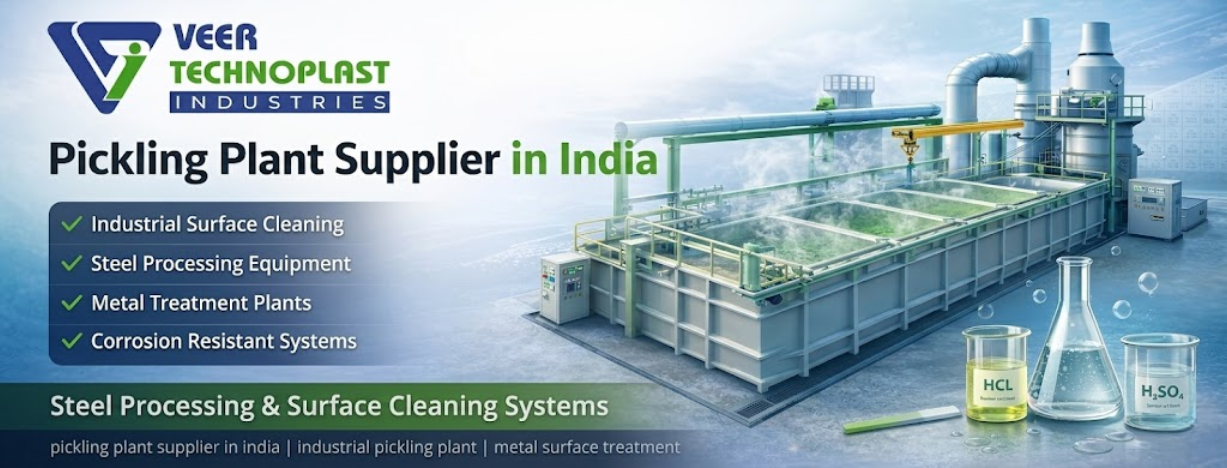
Industrial metal processing requires precise surface preparation before coating, fabrication, or further mechanical processing. One of the most widely used surface preparation technologies in steel processing and fabrication industries is the pickling process. A pickling plant is designed to remove oxide scale, rust, and contaminants from metal surfaces through controlled chemical treatment, allowing the metal to achieve a clean and reactive surface.
A pickling plant supplier in India provides specialized industrial systems used in steel processing units, fabrication industries, wire drawing plants, and pipe manufacturing facilities. These systems ensure that metal surfaces are properly cleaned before galvanizing, electroplating, painting, coating, or further mechanical processing.
Pickling technology plays a crucial role in maintaining product quality, improving coating adhesion, and ensuring uniform surface characteristics in various metallurgical processes. Industries that process steel and metal components rely on efficient pickling systems to achieve consistent product quality and long-term durability.

A pickling plant is an industrial system designed to remove impurities, rust, scale, and oxide layers from metal surfaces using chemical solutions such as hydrochloric acid or sulfuric acid. During metal manufacturing processes, high temperatures often cause oxidation on metal surfaces, forming scale that must be removed before further processing.
The pickling process involves immersing metal products in acid-based chemical baths that dissolve surface oxides and contaminants. Once the cleaning cycle is complete, the metal surface becomes smooth, clean, and ready for coating or mechanical treatment.
Industrial pickling plants are typically constructed using corrosion-resistant materials such as polypropylene, HDPE, or FRP to withstand aggressive chemical environments. These systems may include multiple tanks, rinse sections, fume extraction systems, chemical circulation units, and control panels that support safe and efficient operation.
Metal processing facilities depend on properly engineered pickling systems to maintain consistent product quality and minimize defects in downstream processes.
A complete industrial pickling plant consists of several integrated components that support the chemical cleaning process and ensure the safe handling of acids and metal components.
These components commonly include pickling tanks, rinsing tanks, chemical dosing systems, acid storage tanks, fume extraction units, and neutralization systems. Each component supports a specific stage of the pickling cycle and helps maintain process efficiency.
Pickling tanks are typically manufactured using corrosion-resistant materials such as polypropylene or HDPE to prevent chemical reactions with acids used during the cleaning process. Fume scrubber systems are often integrated into the plant to control acidic vapors and maintain safe working conditions within the production environment.
An efficiently designed pickling plant supports smooth workflow, consistent chemical treatment, and safe management of industrial acids.
Pickling plants are used in various industrial sectors where metal surface treatment is required before coating, finishing, or mechanical processing.
In these industries, proper surface preparation is essential for achieving strong adhesion between metal surfaces and protective coatings. Pickling systems help remove impurities that could otherwise affect coating performance and structural integrity.
Surface preparation is one of the most critical stages in metal processing. Without proper cleaning, metal surfaces may retain oxide layers, rust particles, and contaminants that interfere with coating adhesion and mechanical processing.
Pickling plants play an essential role in improving surface quality before processes such as galvanizing, electroplating, powder coating, and painting. When the oxide layer is removed through pickling, the metal surface becomes chemically active, allowing coatings to bond more effectively.
Industries that require high-quality metal finishing depend on reliable pickling systems to achieve uniform surface treatment across large production volumes. This helps ensure consistent product quality and reduces the likelihood of defects in finished components.
India has a rapidly growing metal processing industry that includes steel production, wire manufacturing, pipe fabrication, and engineering component manufacturing. In these sectors, surface treatment technology plays a vital role in maintaining product quality and meeting industrial standards.
A pickling plant supplier in India provides systems designed to meet the operational requirements of these industries. These plants are engineered to support continuous metal processing operations while maintaining chemical resistance, structural durability, and safe working conditions.
As manufacturing industries expand across India, the demand for reliable pickling plant technology continues to grow, particularly in sectors such as infrastructure, automotive components, fabrication, and engineering manufacturing.
Pickling plants support industrial production by improving metal quality, enabling efficient coating processes, and ensuring reliable surface preparation for a wide range of applications.
Industries planning to install a pickling system must evaluate several technical factors that influence system performance and long-term operational reliability.
Proper plant design ensures that the pickling process operates efficiently while maintaining environmental and workplace safety standards.
Industrial facilities often select pickling systems manufactured using corrosion-resistant materials such as polypropylene and HDPE to extend equipment lifespan and ensure reliable operation under aggressive chemical conditions.
Pickling plants operate using acidic solutions, which require proper containment, ventilation, and neutralization systems to maintain safe industrial environments. Modern pickling plants include integrated fume extraction systems and scrubbers that capture acid vapors generated during the cleaning process.
Wastewater treatment systems are also used to neutralize chemical residues before disposal, ensuring compliance with environmental regulations. Well-designed systems help industries manage chemical waste responsibly while maintaining operational efficiency.
Industrial pickling plants are engineered to follow strict safety standards that protect workers and support environmentally responsible operations.
Metal processing industries continue to adopt advanced pickling technologies to improve process efficiency and reduce environmental impact. Modern pickling plants increasingly incorporate automated chemical dosing systems, improved acid recovery technologies, and advanced ventilation units that enhance plant performance.
Automation and monitoring systems allow industries to maintain precise chemical concentrations and optimize pickling cycles. These advancements help reduce chemical consumption while improving cleaning efficiency and operational safety.
As industrial manufacturing continues to evolve, advanced pickling systems will remain a critical component of modern metal processing infrastructure.
A pickling plant is used to remove rust, scale, oxide layers, and surface contaminants from metal surfaces using acid-based chemical solutions. This process prepares the metal for coating, galvanizing, plating, or further mechanical processing.
Pickling plants are widely used in steel processing industries, wire drawing plants, pipe manufacturing facilities, fabrication units, automotive component manufacturing, and electroplating industries where metal surface cleaning is required.
Pickling plant tanks are commonly manufactured using corrosion-resistant materials such as polypropylene (PP), HDPE, or FRP. These materials resist chemical reactions with acids used during the pickling process.
Pickling removes oxide layers and impurities from metal surfaces, ensuring proper adhesion between the metal and protective coatings such as galvanizing, electroplating, powder coating, or painting.
Common chemicals used in pickling plants include hydrochloric acid and sulfuric acid, depending on the metal type and industrial application. These chemicals dissolve oxide scale and contaminants from metal surfaces.
By removing scale and rust, pickling creates a clean metal surface that improves coating adhesion, enhances corrosion resistance, and supports consistent product quality in downstream manufacturing processes.
Veer Technoplast Industries manufactures durable, corrosion-resistant industrial tanks, scrubber systems, and advanced plastic engineering solutions.
2026 All Rights Reserved | Website by IndustryLead