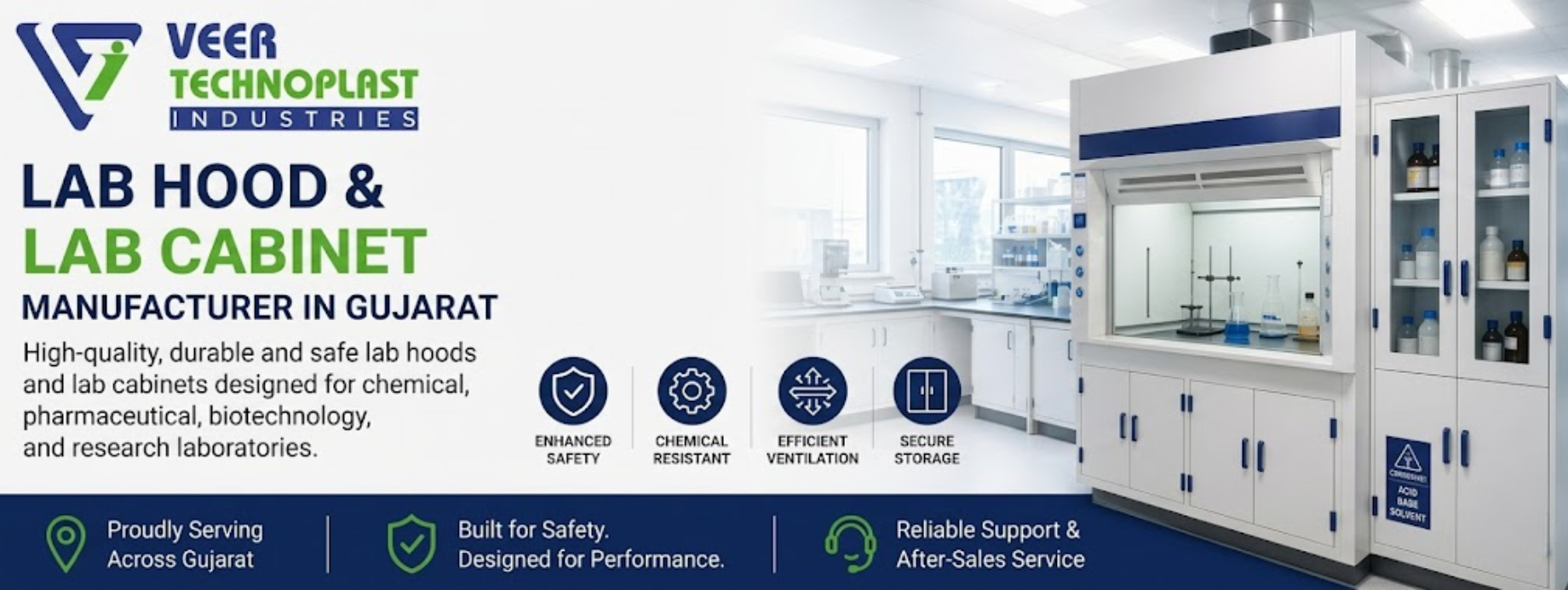
Laboratories across Gujarat are evolving with stricter safety
standards, advanced research requirements, and higher operational expectations. In such environments, lab hoods
and lab cabinets play a vital role in maintaining safety, efficiency, and regulatory compliance. Whether in
pharmaceutical facilities, chemical processing units, or academic research labs, proper ventilation and secure
storage are no longer optional—they are essential.
Overview
A lab hood ensures that hazardous fumes, vapors, and airborne particles
are effectively removed from the working area
A lab hood ensures that hazardous fumes, vapors, and airborne particles
are effectively removed from the working area, protecting both personnel and experiments. At the same time, lab
cabinets provide organized, contamination-free storage for chemicals, reagents, and sensitive laboratory
equipment. Together, these systems form the foundation of a safe and controlled laboratory environment.
Understanding
Understanding the Role of Lab Hoods and Lab Cabinets
Lab hoods and lab cabinets are designed to address two critical aspects
of laboratory safety: exposure control and material management. Lab hoods, particularly fume hoods, are engineered
to capture and exhaust harmful gases and vapors generated during experiments. They create a controlled airflow
environment that minimizes the spread of contaminants.
Lab cabinets, on the other hand, are designed to store hazardous and
non-hazardous materials safely. These cabinets help reduce the risk of chemical reactions, spills, and accidental
exposure by providing designated storage zones. When constructed using chemical-resistant materials, they ensure
long-term durability even in demanding laboratory conditions.
Market Demand
Why Gujarat Has a Growing Demand for Lab Safety Solutions
Gujarat is one of India's leading industrial regions, known for its
strong presence in chemical manufacturing, pharmaceuticals, and industrial research. Cities such as Ahmedabad,
Vadodara, and Ankleshwar host numerous laboratories that require high-performance safety systems.
The increasing focus on regulatory compliance, workplace safety, and
environmental standards has significantly driven the demand for advanced lab hoods and cabinets across Gujarat.
Industries are actively upgrading their laboratory infrastructure to meet both national and international safety
requirements. This shift highlights the importance of investing in reliable, durable, and application-specific lab
solutions.
Materials
Materials Used in Modern Lab Hoods and Cabinets
Modern laboratory environments demand materials that can withstand harsh
chemicals and continuous usage. Lab hoods and cabinets are commonly manufactured using materials such as
polypropylene (PP), high-density polyethylene (HDPE), fiber-reinforced plastic (FRP), and stainless steel.
Each material offers specific advantages
depending on the application. PP and HDPE provide excellent resistance to acids and corrosive chemicals, making
them ideal for chemical laboratories. FRP offers strong structural integrity and durability, while stainless steel
is preferred in environments that require high hygiene standards and temperature resistance.
These materials not only extend the lifespan of laboratory equipment but
also help maintain a safe and contamination-free working environment.
Features
Key Functional Features That Improve Laboratory Safety
Modern lab hoods and cabinets are equipped with features that enhance
both safety and usability.
Efficient fume extraction systems help remove hazardous vapors quickly and maintain clean air quality
Adjustable airflow mechanisms allow precise control based on the nature of the experiment or process
Smooth, non-reactive surfaces simplify cleaning and reduce chemical buildup
Integrated lighting systems improve visibility during detailed laboratory tasks
Safety components such as sash windows and airflow indicators support better operational control
Ergonomic design ensures comfort during extended working hours
These features work together to
create a safer, more efficient, and user-friendly laboratory environment.
Types
Types of Lab Hoods Used in Laboratories
Different laboratory applications require specific types of hoods based
on safety requirements and operational needs.
Ducted Fume Hoods are connected to external exhaust systems and are suitable for handling
large volumes of hazardous fumes
Ductless Fume Hoods use advanced filtration systems such as activated carbon or HEPA filters
and are ideal for controlled environments
Laminar Flow Hoods provide clean air environments for sensitive experiments and contamination
control
Chemical Fume Hoods are specifically designed for chemical handling and high-risk reactions
Choosing the right type of hood
depends on the nature of laboratory operations and the level of risk involved.
Applications
Applications of Lab Hoods and Cabinets Across Industries
Lab hoods and cabinets are widely used across multiple industries due to
their safety and functional benefits.
Chemical laboratories for handling acids, solvents, and reactive compounds
Pharmaceutical manufacturing units for research and drug formulation
Biotechnology labs for controlled experiments and biological testing
Educational institutions for safe academic experiments
Quality control and R&D labs for precise testing and analysis
Microbiology labs for contamination-controlled processes
Their use ensures that
laboratory operations remain safe, efficient, and compliant with industry regulations.
Selection Guide
Factors to Consider When Choosing a Lab Hood & Cabinet Manufacturer
in Gujarat
Selecting the right manufacturer is essential to ensure long-term
performance and safety. Buyers should carefully evaluate the following factors.
Experience in manufacturing laboratory equipment and understanding of industry standards
Use of high-quality, chemical-resistant materials
Customization capabilities based on laboratory layout and specific application needs
Compliance with safety and ventilation standards
Availability of technical support and installation services
Ability to integrate with existing laboratory systems such as ducting and filtration
A reliable manufacturer not only
supplies equipment but also assists in selecting the most suitable configuration for specific laboratory
requirements.
Installation & Maintenance
Importance of Proper Installation and Maintenance
Even the most advanced lab hood or cabinet will not perform effectively
without proper installation and regular maintenance. Correct placement, airflow calibration, and integration with
ventilation systems are essential for optimal performance.
Routine maintenance ensures that filters, airflow systems, and
structural components operate as intended. This includes periodic inspection, cleaning, and timely replacement of
filters when required. Proper maintenance not only extends the lifespan of the equipment but also ensures
consistent safety standards within the laboratory.
Future Outlook
Future Trends in Laboratory Safety Equipment
Laboratory infrastructure continues to evolve with technological
advancements. Smart lab hoods with digital airflow monitoring, energy-efficient ventilation systems, and modular
cabinet designs are becoming increasingly common.
There is also a growing emphasis on sustainability, with manufacturers
focusing on eco-friendly materials and energy-saving systems. As industries in Gujarat expand further, the demand
for innovative, efficient, and future-ready lab safety solutions is expected to rise steadily.
Conclusion
Lab Hoods and Lab Cabinets: Essential Components of Modern
Laboratory Infrastructure
Lab hoods and lab cabinets are essential components of modern
laboratory infrastructure, ensuring safety, organization, and regulatory compliance. With Gujarat emerging as a
major hub for chemical, pharmaceutical, and industrial activities, the demand for high-quality laboratory safety
solutions continues to grow. Choosing the right manufacturer and ensuring proper installation and maintenance can
significantly enhance laboratory efficiency and safety standards.
FAQs
Frequently Asked Questions
A lab hood is used to
protect laboratory personnel by capturing and removing hazardous fumes, vapors, and airborne particles
generated during experiments. It helps maintain a safe working environment by reducing exposure to harmful
substances.
Materials such as
polypropylene, HDPE, and FRP are widely preferred due to their strong resistance to corrosive chemicals. These
materials ensure durability and reduce the risk of chemical damage or reactions.
Ducted fume hoods are
connected to an external exhaust system that removes contaminants outside the building. Ductless hoods use
internal filtration systems to purify the air before recirculating it within the laboratory.
Lab hoods are essential in
laboratories where hazardous chemicals, fumes, or vapors are present. The type and specifications depend on
the nature of laboratory activities and associated risks.
Filter replacement depends
on usage and the type of filtration system. Regular inspection is necessary, and filters should be replaced
when airflow efficiency decreases or contamination levels increase.
Yes, lab cabinets can be
customized in terms of size, material, and configuration to meet specific laboratory needs. Customization
improves space utilization and enhances overall safety.