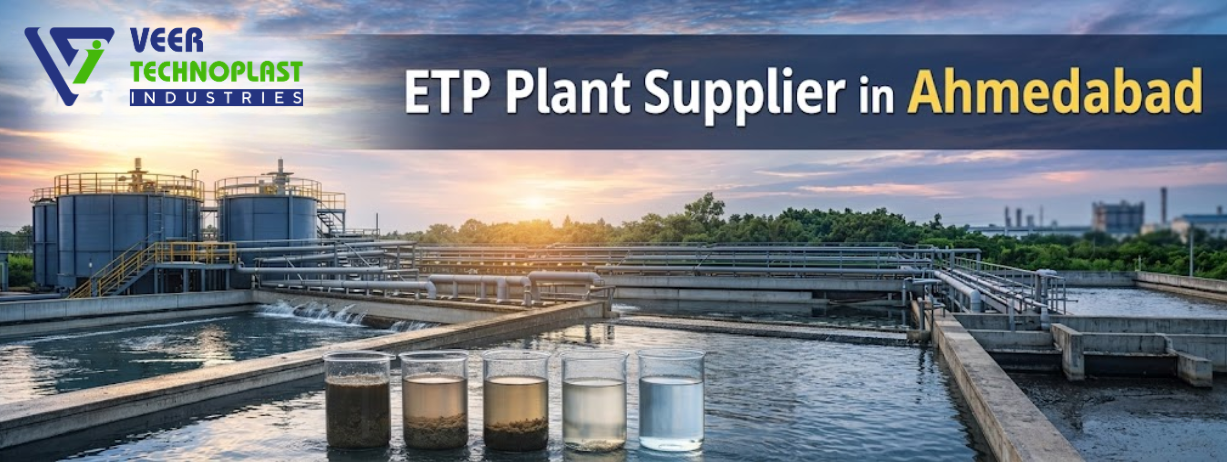
ETP Plant Supplier in Ahmedabad
Effluent Treatment Plants are essential systems that remove harmful contaminants, ensuring industrial operations remain compliant with environmental regulations while protecting natural water resources.
Ahmedabad, being a major industrial hub in Gujarat, hosts industries such as textiles, chemicals, pharmaceuticals, engineering, and metal processing. These industries generate large volumes of wastewater containing pollutants like suspended solids, oils, chemicals, and heavy metals. Without proper treatment, such discharge can harm ecosystems and lead to regulatory penalties.
This is where a well-designed ETP system becomes a critical part of industrial infrastructure.
Understanding Effluent Treatment Plants and Their Role in Industry
An Effluent Treatment Plant is a structured system designed to treat industrial wastewater through multiple stages. The process typically involves physical, chemical, and biological treatment methods that work together to remove contaminants and improve water quality. These systems ensure that treated water meets regulatory discharge standards or can be safely reused within the facility.
The importance of ETP systems lies in their ability to handle complex industrial effluents. Industrial wastewater often contains toxic compounds, varying pH levels, and high organic loads. A properly engineered ETP plant stabilizes these variations and delivers consistent output quality, making the water safe for discharge or reuse.
In Ahmedabad, industries rely heavily on ETP plants to meet pollution control board guidelines. The growing focus on sustainability and environmental responsibility has further strengthened the need for efficient wastewater treatment solutions.
How ETP Plants Work in Industrial Applications
Effluent Treatment Plants operate through a series of carefully designed stages that target different types of impurities. Each stage plays a specific role in the purification process, ensuring comprehensive treatment of wastewater.
- Screening removes large particles and debris from incoming wastewater
- Equalization balances flow and concentration variations
- Coagulation and flocculation form larger particles from fine suspended solids
- Aeration supports biological treatment by breaking down organic matter
- Clarification separates solids from treated water
- Filtration removes remaining fine impurities
- Disinfection eliminates harmful microorganisms before final discharge
These processes work together to ensure wastewater is treated efficiently and meets environmental standards. The design and configuration of an ETP plant may vary depending on the industry type and effluent characteristics.
Why Ahmedabad Industries Need Reliable ETP Plant Solutions
Ahmedabad's industrial landscape continues to expand, leading to increased wastewater generation. At the same time, environmental regulations have become stricter, requiring industries to adopt efficient treatment systems. An ETP Plant supplier in Ahmedabad provides solutions that align with these regulatory requirements while ensuring operational reliability.
Industries in this region often face challenges such as fluctuating effluent composition, high pollutant loads, and limited space availability. Modern ETP systems are designed to address these challenges through compact layouts, automated controls, and flexible configurations. This allows industries to maintain uninterrupted operations while managing wastewater effectively.
Additionally, water scarcity has encouraged industries to focus on recycling and reuse. ETP plants enable treated water to be reused for non-potable applications such as cooling, cleaning, and gardening, reducing dependence on fresh water sources.
Technology and Innovation in Modern ETP Systems
Advancements in wastewater treatment technology have significantly improved the efficiency and reliability of ETP plants. Modern systems integrate automation, real-time monitoring, and energy-efficient components to enhance performance.
Automation through PLC and SCADA systems allows operators to monitor and control key parameters such as pH levels, flow rates, and chemical dosing. This reduces manual intervention while ensuring consistent treatment quality. Advanced aeration systems improve biological treatment efficiency, while improved filtration methods enhance the final output quality.
Innovative designs also focus on reducing sludge generation and optimizing energy consumption, making ETP plants more sustainable and cost-effective.
Environmental Impact and Sustainability Benefits
Effluent Treatment Plants play a vital role in reducing the environmental impact of industrial activities. By treating wastewater before discharge, these systems help prevent pollution of rivers, lakes, and groundwater sources.
ETP plants also support sustainable industrial practices by enabling water recycling and reducing the overall environmental footprint. Industries that implement effective wastewater treatment systems demonstrate strong environmental responsibility and regulatory compliance.
In Ahmedabad, where industrial activity is high, ETP systems are essential for maintaining ecological balance and supporting long-term sustainability goals.
Maintenance and Operational Efficiency of ETP Plants
Proper maintenance is essential for ensuring consistent performance of an ETP plant. Regular inspection and monitoring help identify potential issues before they impact system efficiency.
Routine maintenance activities include checking pumps and blowers, monitoring sludge levels, and ensuring proper functioning of aeration and filtration systems. Automated systems simplify these processes by providing real-time data and alerts, enabling timely corrective actions.
Efficient operation of an ETP plant reduces downtime, improves treatment quality, and extends equipment lifespan, making it a dependable solution for industrial wastewater management.
Future Trends in Effluent Treatment Systems
The future of wastewater treatment is focused on sustainability, efficiency, and resource recovery. Industries are increasingly adopting advanced technologies such as membrane filtration, zero liquid discharge systems, and smart monitoring solutions.
These innovations aim to improve water recovery rates, reduce waste generation, and enhance overall system performance. As environmental regulations continue to evolve, the demand for advanced ETP systems is expected to grow in Ahmedabad and across India.