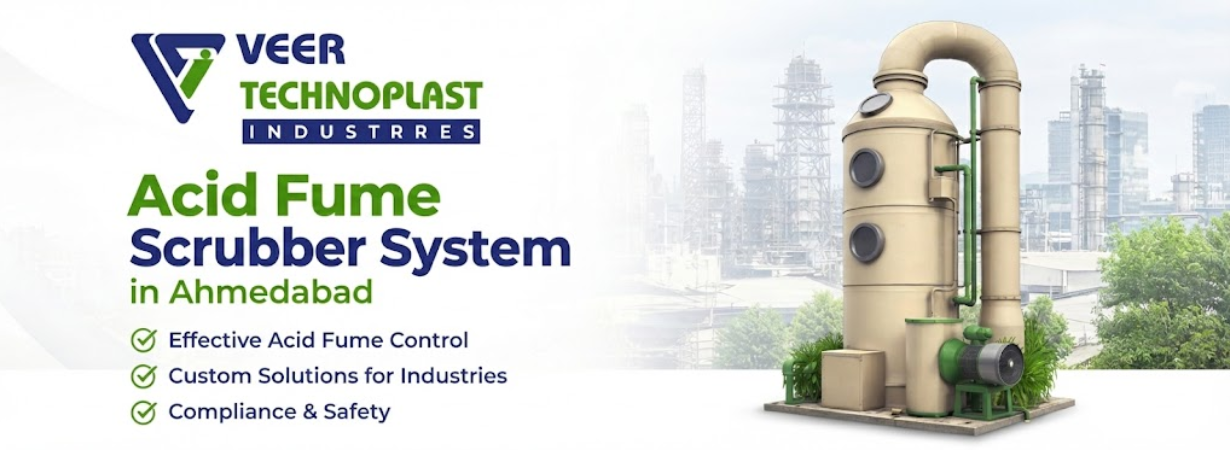
Understanding Acid Fume Scrubber Systems
An Acid Fume Scrubber System is an air pollution control unit
designed to remove acidic vapors and corrosive gases from industrial exhaust air. These fumes
commonly originate from processes such as pickling, electroplating, anodizing, chemical reactions,
and acid storage or handling areas. If left untreated, such emissions pose serious risks to worker
health, plant equipment, and the surrounding environment.
The system operates on wet scrubbing principles. Contaminated
air is drawn through the scrubber using a chemical-resistant blower. Inside the scrubber, the air
comes into contact with a neutralizing liquid, typically an alkaline solution, which absorbs and
neutralizes the acidic components. The treated air is then safely discharged, while the neutralized
liquid is recirculated or drained based on system design.
Industrial Importance of Acid Fume Control
Acid fumes such as hydrochloric acid, sulfuric acid, nitric
acid, and mixed acidic vapors are highly corrosive. Prolonged exposure can damage the respiratory
system, eyes, and skin, while even low-level emissions can gradually corrode machinery, structures,
and electrical systems. Acid Fume Scrubber Systems act as a primary control measure to reduce these
risks.
Industries operating without effective fume scrubbing face
challenges such as unsafe working conditions, accelerated equipment degradation, environmental
non-compliance, and operational disruptions. In industrial clusters around Ahmedabad, where
production density is high, effective emission control systems are essential for sustainable and
responsible operations.
Working Principle of Acid Fume Scrubber Systems
The operation of an Acid Fume Scrubber System follows a
controlled and continuous process. Exhaust air containing acidic vapors is captured from process
sources using hoods, enclosures, or ducting systems and conveyed into the scrubber unit.
Inside the scrubber, packed bed media or multi-stage scrubbing
sections increase the surface area for contact between air and the neutralizing liquid. Acidic gases
dissolve into the liquid and undergo chemical neutralization. Mist eliminators installed at the
outlet prevent liquid droplets from escaping with the treated air. The neutralized air is then
released through an exhaust stack, meeting acceptable emission levels.
Materials Used in Acid Fume Scrubber Construction
Material selection is critical for long-term performance in
acidic environments. Acid Fume Scrubber Systems are fabricated using corrosion-resistant materials
that retain structural integrity under continuous chemical exposure. Common materials include
polypropylene, high-density polyethylene, fiber reinforced plastic, and combinations such as PP
lined FRP.
Each material is selected based on the nature of the acid fumes,
operating temperature, airflow rate, and application conditions. Proper material compatibility
ensures durability, reduced maintenance requirements, and consistent performance throughout the
system's service life.
Key Functional Features of Modern Scrubber Systems
Modern Acid Fume Scrubber Systems are engineered to deliver high
efficiency while maintaining operational reliability. They are designed to handle fluctuating
airflow rates and varying pollutant concentrations without compromising removal performance.
Key functional advantages include optimized air–liquid contact
for effective scrubbing, energy-efficient operation due to low pressure drop designs, and modular
construction that allows straightforward integration into existing facilities. These systems are
compatible with chemical-resistant blowers, pumps, and ducting networks, supporting stable operation
in complex industrial layouts.
Industrial Applications Across Sectors
Acid Fume Scrubber Systems are used across a wide range of
industries where acidic emissions are unavoidable.
Chemical manufacturing units use scrubbers to control
emissions from reactors, mixing vessels, and storage tanks.
Metal finishing industries, including electroplating,
anodizing, and pickling, rely on scrubbers to manage acid vapors generated during surface
treatment processes.
Pharmaceutical and biotechnology facilities install
scrubbers to maintain controlled exhaust handling and clean working environments.
Agrochemical and fertilizer plants depend on scrubbers
to neutralize acidic gases produced during synthesis and formulation.
Laboratories and research centers use compact scrubber
systems for safe handling of fumes from experimental setups.
Battery manufacturing and acid regeneration units also
require effective fume control due to continuous acid handling operations.
Role of Acid Fume Scrubber Systems in Regulatory Compliance
Environmental regulations in India require strict control of
industrial air emissions, particularly in urban and semi-urban industrial zones such as Ahmedabad.
Pollution control authorities mandate that industries limit acidic gas discharge within permissible
levels to protect public health and environmental quality.
Installing an Acid Fume Scrubber System supports compliance with
emission norms, helps maintain readiness during inspections, and demonstrates responsible
environmental management. Compliance also reduces the risk of operational shutdowns, penalties, or
legal complications linked to uncontrolled emissions.
Why Ahmedabad Industries Require Specialized Scrubber
Solutions
Ahmedabad is a major industrial hub in Gujarat, hosting chemical
plants, surface treatment units, engineering workshops, and processing facilities. The diversity of
industrial operations in the region requires scrubber systems that can adapt to different production
capacities, chemical profiles, and space limitations.
Customized Acid Fume Scrubber Systems are especially important
in Ahmedabad due to mixed industrial layouts and expanding manufacturing facilities. Systems
designed to suit local operating conditions deliver better performance, longer service life, and
smoother integration with existing infrastructure.
Integration with Ventilation and Exhaust Systems
An Acid Fume Scrubber System functions most effectively when
integrated with the overall ventilation and exhaust setup. Coordination with hoods, ducting
networks, and exhaust blowers ensures efficient air capture and consistent fume treatment.
Integration considerations include duct material compatibility,
airflow balancing, blower sizing, and correct placement of mist eliminators. A well-integrated
system improves plant safety and ensures stable emission control under varying operating conditions.
Maintenance and Operational Considerations
Although Acid Fume Scrubber Systems are built for durability,
routine maintenance is essential to sustain performance. Regular inspection of packing media, pumps,
blowers, and liquid circulation systems helps maintain scrubbing efficiency.
Monitoring the pH of the scrubbing liquid ensures effective
neutralization, while periodic cleaning of mist eliminators and duct connections prevents pressure
losses and airflow restrictions. With proper maintenance, these systems deliver long service life
with minimal downtime.
Selecting the Right Acid Fume Scrubber System
Selecting the appropriate scrubber system requires careful
evaluation of process requirements, chemical properties, airflow volume, and available installation
space. Industries benefit most from systems engineered specifically for their applications rather
than generic configurations.
Important selection factors include compatibility with the type
of acid fumes generated, scalability for future expansion, ease of maintenance, and integration with
existing exhaust systems. Application-specific designs provide better long-term reliability and
operational stability.
Conclusion
An Acid Fume Scrubber System is a critical component for
industries handling acidic processes, particularly in industrial regions like Ahmedabad. By
controlling corrosive emissions, these systems protect workers, equipment, and the environment while
supporting regulatory compliance and operational continuity. With appropriate design, material
selection, and maintenance, acid fume scrubbers provide reliable and long-term emission control
across diverse industrial applications.