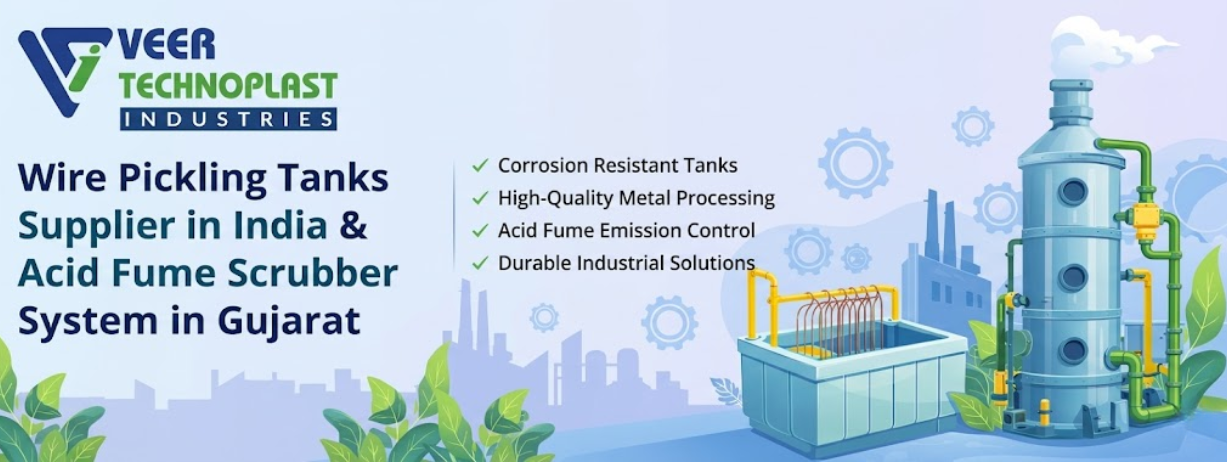
Wire pickling tanks play a crucial role in metal processing industries where surface preparation is essential for achieving high-quality end products. A reliable wire pickling tanks supplier in India provides specialized tanks designed to efficiently remove rust, scale, and oxide layers from metal wires. These tanks are widely used in wire drawing units, galvanizing plants, and metal finishing industries, where clean surfaces directly influence product performance.
With the rapid growth of industrial manufacturing in India, the demand for durable and chemically resistant pickling tanks has increased significantly. Industries now require solutions that can withstand aggressive chemical environments while maintaining operational safety and consistency. Wire pickling tanks are engineered to meet these requirements, ensuring dependable performance across a wide range of industrial applications.
Wire pickling tanks are designed to facilitate the chemical cleaning of metal wires using acidic solutions such as hydrochloric acid or sulfuric acid. Their primary function is to eliminate impurities like rust, mill scale, and oxidation from the wire surface before further processing.
These tanks are manufactured using corrosion-resistant materials such as polypropylene (PP), high-density polyethylene (HDPE), fiber-reinforced plastic (FRP), or combinations like PP with FRP reinforcement. This ensures long-term durability even in highly corrosive environments.
The pickling process improves the surface quality of wires, making them suitable for downstream applications such as coating, galvanizing, or drawing. Properly designed tanks also support uniform chemical reactions, resulting in consistent and reliable production outcomes.

Wire pickling tanks are essential in industries where metal surface quality directly affects the final product. In India's expanding industrial ecosystem, these tanks are widely used across multiple sectors.
Their importance lies in improving product quality, reducing defects, and enhancing overall process efficiency. Clean metal surfaces allow better bonding during coating processes and minimize the risk of product failure in later stages.
Additionally, these tanks support industries in maintaining compliance with quality standards by ensuring that surface preparation processes are carried out effectively and consistently.
The choice of material for wire pickling tanks is critical, as it determines durability and resistance to chemicals. Materials are selected based on the type of chemicals used and operating conditions.
Polypropylene tanks are commonly preferred due to their excellent chemical resistance and lightweight structure.
HDPE tanks offer high impact strength and flexibility, making them suitable for diverse industrial environments.
FRP tanks provide enhanced structural strength and are often used for larger installations where additional reinforcement is required.
Composite constructions, such as PP with FRP reinforcement, combine the advantages of both materials, offering superior chemical resistance along with structural stability.
Wire pickling tanks are designed with features that ensure safe and efficient operation in industrial environments:
These features make wire pickling tanks a dependable solution for industries requiring consistent and high-performance chemical processing.
Wire pickling tanks are widely used across industries where metal cleaning and preparation are essential:
These applications highlight the role of wire pickling tanks in maintaining product quality and process efficiency.
The manufacturing of wire pickling tanks involves advanced fabrication techniques to ensure durability and precision. Processes such as hot gas welding, butt-fusion welding, and FRP lamination are commonly used to produce leak-proof and structurally strong tanks.
Key design considerations include tank size, thickness, reinforcement, and compatibility with additional components such as heating coils, drainage systems, and fume extraction units. Each tank is designed based on specific industrial requirements and the type of chemicals involved.
Proper engineering ensures that the tanks can handle both hot and cold pickling processes while maintaining safety and operational efficiency.
India has emerged as a significant hub for industrial equipment manufacturing, including wire pickling tanks. The presence of skilled manufacturers, advanced production capabilities, and rising industrial demand has contributed to this growth.
Industries are increasingly focusing on improving production quality and efficiency, leading to greater adoption of advanced pickling systems. Manufacturers are also integrating modern materials and engineering practices to meet global standards.
The availability of customized solutions and cost-effective manufacturing further strengthens India's position as a reliable source for wire pickling tanks.
Selecting the right supplier is essential to ensure the quality and performance of wire pickling tanks. Industries should evaluate several factors before making a decision:
A reliable supplier ensures that the tanks meet specific operational requirements while delivering long-term durability.
Proper maintenance of wire pickling tanks is important for ensuring longevity and safe operation. Regular inspections help identify wear or damage early, reducing the risk of unexpected failures.
Operators should follow safety guidelines when handling chemicals and ensure that tanks are equipped with proper ventilation and fume extraction systems. Routine cleaning and monitoring of components such as valves, pipes, and heating systems are also necessary.
Implementing these measures enhances operational safety while maintaining process efficiency.
The future of wire pickling tanks is evolving with advancements in materials and engineering. Manufacturers are focusing on improved chemical resistance, enhanced durability, and better environmental compatibility.
Automation and integration with monitoring systems are becoming more common, allowing industries to optimize processes and reduce manual intervention. Sustainable manufacturing practices are also being adopted to minimize environmental impact while maintaining performance.
These developments are expected to further improve the reliability and efficiency of wire pickling tanks in industrial applications.
Wire pickling tanks are an essential component in modern metal processing industries, ensuring clean and high-quality surfaces for further production processes. With growing industrial demand in India, these tanks continue to play a vital role in improving efficiency, product quality, and operational safety. Choosing the right design and supplier helps ensure long-term reliability and consistent performance in demanding environments.
A wire pickling tank is used to remove rust, scale, and oxide layers from metal wires using chemical solutions, preparing them for further processing such as coating or drawing.
Wire pickling tanks are commonly made from polypropylene, HDPE, FRP, or composite materials to ensure resistance to corrosive chemicals and long service life.
Yes, these tanks can be customized based on capacity, chemical type, plant layout, and operational requirements.
Wire pickling tanks are designed to handle both hot and cold pickling processes, depending on their material and construction.
Industries such as wire drawing, galvanizing, electroplating, and metal processing widely use wire pickling tanks.
Regular inspection, cleaning, proper handling of chemicals, and monitoring of components like valves and heating systems help maintain efficiency and extend service life.
Veer Technoplast Industries manufactures durable, corrosion-resistant industrial tanks, scrubber systems, and advanced plastic engineering solutions.
2026 All Rights Reserved | Website by IndustryLead