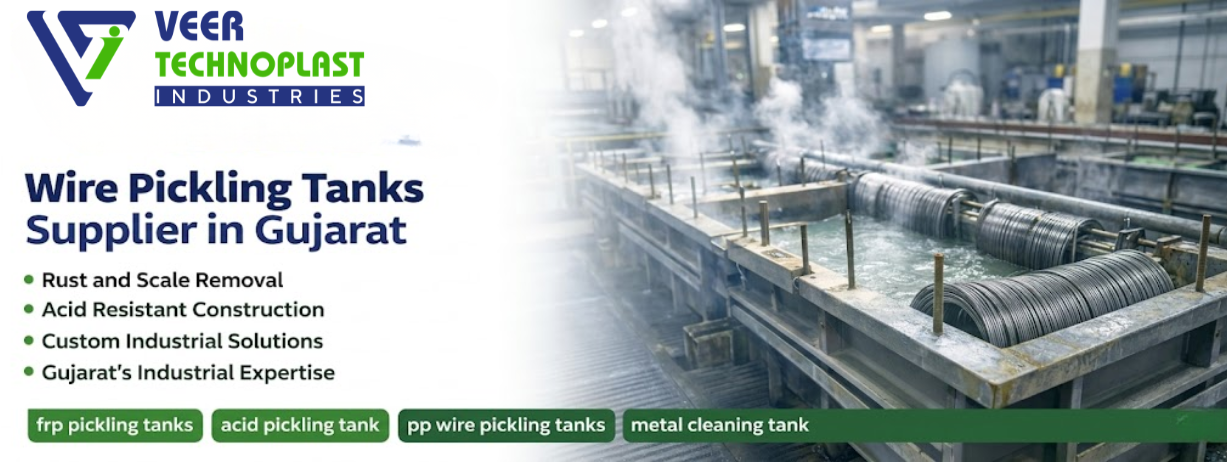
Wire pickling tanks play a critical role in metal processing industries where surface preparation is essential for achieving consistent quality and performance. A wire pickling tanks supplier in Gujarat provides specialized tanks designed to remove rust, scale, oxides, and other surface contaminants from metal wires. These tanks are engineered to support safe, efficient chemical treatment processes in demanding industrial environments.
Gujarat has a strong presence of wire drawing units, metal processing facilities, and manufacturing industries that depend on reliable pickling systems. The demand for high-quality pickling tanks continues to grow as industries focus on improving product finish, reducing defects, and maintaining process efficiency. Wire pickling tanks are typically designed using corrosion-resistant materials to handle aggressive acids and ensure long-term durability.
Wire pickling tanks are used in chemical cleaning processes where metal wires are treated with acid solutions to remove surface impurities. These impurities include rust, mill scale, and oxide layers that form during manufacturing or storage. The pickling process prepares the wire surface for further operations such as coating, galvanizing, or drawing.
These tanks are commonly constructed using materials such as polypropylene, high-density polyethylene, fiber-reinforced plastic, or stainless steel. The selection of material depends on the type of chemical used and the operating conditions. The tanks are built to withstand chemical reactions, temperature variations, and continuous industrial usage without degradation.
The design of wire pickling tanks ensures uniform chemical exposure, which is essential for consistent cleaning results. Smooth inner surfaces and controlled flow management help achieve even treatment across the entire wire surface.

Gujarat is known for its extensive industrial infrastructure, particularly in metal processing, engineering, and manufacturing sectors. Wire pickling tanks are widely used across these industries to maintain production quality and operational efficiency.
Industries in Gujarat rely on pickling tanks to ensure that metal wires meet required surface standards before entering the next stage of production. The presence of chemical processing industries in the region also supports the integration of advanced pickling systems that improve productivity and operational safety.
The increasing focus on quality control and process optimization has made wire pickling tanks an essential component in modern manufacturing setups. Their ability to deliver consistent results contributes to improved product reliability and reduced material rejection.
The performance of wire pickling tanks largely depends on the materials used in their construction. Industrial tanks must withstand strong acids such as hydrochloric acid, sulfuric acid, and mixed chemical solutions used during pickling operations.
Polypropylene and HDPE are widely used due to their excellent chemical resistance and lightweight properties. Fiber-reinforced plastic is preferred for applications requiring higher structural strength and durability. In some cases, composite constructions combining multiple materials are used to enhance overall performance.
The manufacturing process involves advanced techniques such as hot gas welding, butt fusion, and FRP lamination. These methods help ensure leak-proof construction and extended service life. Proper reinforcement using structural supports and stiffeners enhances tank stability during continuous operation.
The wire pickling process follows a systematic approach to ensure effective cleaning and preparation of metal surfaces.
This controlled process ensures that the wire surface remains clean, smooth, and ready for subsequent manufacturing steps.
Wire pickling tanks offer several operational benefits that support improved efficiency and product quality in industrial processes.
These advantages make pickling tanks a critical component in metal processing operations.
Wire pickling tanks are used across various industrial sectors where metal surface preparation is required before further processing.
Their versatility allows seamless integration into different production environments.
Industrial applications often require customized solutions to match specific production requirements. Wire pickling tanks can be designed based on factors such as wire size, production capacity, chemical type, and plant layout.
Customization may include tank dimensions, wall thickness, reinforcement structure, and integration of accessories such as heating systems, fume extraction units, and safety covers. Proper design ensures optimal performance and safe operation in industrial settings.
Design considerations also include ease of maintenance, accessibility, and compatibility with existing systems. A well-designed pickling tank contributes to smoother workflow and reduced operational downtime.
Handling strong acids and chemical solutions requires strict safety practices. Wire pickling tanks are designed to minimize risks associated with chemical exposure and leakage.
Proper ventilation systems and fume extraction units help control hazardous emissions during the pickling process. Leak-proof construction and secure fittings reduce the risk of accidental spills and ensure safer operation.
Environmental considerations include proper waste management and treatment of used chemicals. Many industrial setups incorporate effluent treatment systems to comply with regulations and reduce environmental impact.
Regular maintenance is essential to ensure long-term performance of wire pickling tanks. Routine inspections help identify potential issues such as wear, leakage, or structural damage.
Proper cleaning and monitoring of chemical levels support consistent process efficiency. Maintenance practices also include checking fittings, reinforcements, and auxiliary components to ensure reliable operation.
Efficient maintenance reduces downtime and extends the lifespan of the equipment, making it a dependable solution for industrial applications.
Advancements in industrial processing are driving continuous improvements in pickling technology. Modern systems focus on enhancing efficiency, reducing chemical consumption, and improving safety standards.
Automation and process control systems are increasingly integrated into pickling operations to ensure precision and consistency. Improved material technologies are also contributing to longer-lasting and more durable tank designs.
Sustainable practices, including chemical recycling and energy-efficient operations, are becoming more important across industries. These developments are shaping the future of wire pickling systems.
Wire pickling tanks are essential for ensuring clean and defect-free metal surfaces in industrial manufacturing processes. Their ability to handle aggressive chemicals, deliver consistent cleaning results, and support high-volume operations makes them a vital component in modern production systems. As industries continue to prioritize quality, efficiency, and sustainability, the role of wire pickling tanks remains critical in achieving reliable and high-performance outcomes.
Veer Technoplast Industries manufactures durable, corrosion-resistant industrial tanks, scrubber systems, and advanced plastic engineering solutions.
2026 All Rights Reserved | Website by IndustryLead