

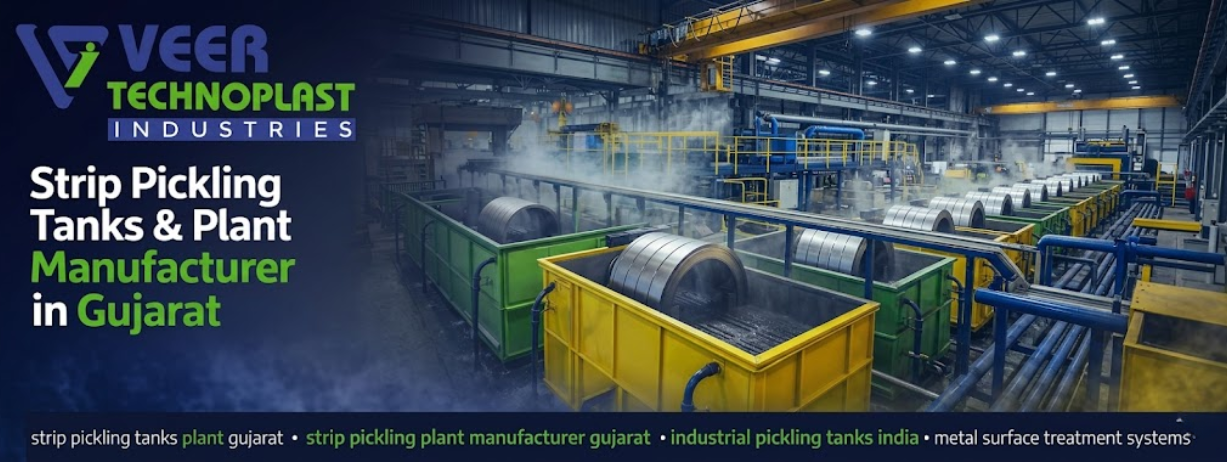
Strip pickling tanks and plants play a critical role in industrial metal processing, where surface quality directly influences final product performance. A strip pickling tanks & plant manufacturer in Gujarat provides specialized systems designed to remove scale, rust, and oxide layers from metal strips such as steel and aluminum. These systems ensure a clean and uniform surface, which is essential for further processes like coating, galvanizing, and cold rolling.
In Gujarat, where industrial manufacturing and metal processing sectors continue to expand, the demand for efficient surface treatment solutions is steadily increasing. Strip pickling systems are widely used in industries that require high-quality strip finishing, helping maintain consistent production standards and operational efficiency.
Strip pickling tanks and plants are engineered systems used for the chemical surface treatment of metal strips. Their primary function is to remove unwanted surface impurities through controlled acid treatment processes. This improves coating adhesion and enhances the overall quality of the final product.
These systems are typically constructed using corrosion-resistant materials such as polypropylene, high-density polyethylene, fiber-reinforced plastic, or stainless steel. This ensures durability and resistance against aggressive chemicals used during pickling operations.
A complete strip pickling plant consists of multiple stages arranged in sequence. These stages include degreasing, acid pickling, rinsing, and neutralization. The process can be configured for continuous or batch operations depending on specific production requirements.
A strip pickling plant is not a single unit but a combination of integrated systems working together to deliver consistent results. Each stage plays a vital role in preparing the metal surface before it moves to the next phase.
The main components include degreasing tanks for removing oils and contaminants, pickling tanks for acid treatment, rinsing tanks to eliminate chemical residues, and neutralizing tanks to balance pH levels. Additional systems such as fume extraction units, heating systems, and dosing equipment are often integrated to enhance efficiency and maintain safe operating conditions.
Material selection is a critical factor in the design of strip pickling tanks. Since these systems handle corrosive chemicals like hydrochloric acid or sulfuric acid, they must be built using materials that can withstand chemical reactions and temperature variations over extended periods.
Polypropylene and HDPE are commonly used due to their excellent chemical resistance and cost-effectiveness. FRP reinforcement provides structural strength, particularly for larger tanks, while stainless steel may be used in applications requiring higher mechanical strength.
Advanced fabrication techniques such as hot gas welding and butt fusion ensure leak-proof construction and long-term reliability.
Strip pickling systems are widely used across industries where metal surface preparation is essential. They help maintain product quality and improve process efficiency in various manufacturing environments.
The strip pickling process follows a structured sequence to ensure complete surface cleaning while maintaining material integrity. Each stage is designed to remove specific contaminants and prepare the strip for subsequent processing.
This systematic approach ensures consistent results and reduces the risk of defects in downstream applications.
Strip pickling systems offer several operational advantages for industries involved in metal processing. Their structured design and efficient chemical treatment improve both productivity and product quality.
Gujarat has emerged as a major hub for industrial manufacturing, particularly in sectors such as steel processing, automotive components, and heavy engineering. With increasing emphasis on quality standards and production efficiency, the demand for strip pickling tanks & plant manufacturer in Gujarat continues to rise.
Industries in Ahmedabad and surrounding regions require reliable surface treatment systems capable of handling high production volumes while maintaining consistent output. Strip pickling plants provide a practical solution by ensuring effective cleaning and preparation of metal strips before further processing.
Additionally, stricter environmental and safety regulations have encouraged industries to adopt systems that minimize emissions and improve waste management. Modern pickling plants are designed with integrated fume scrubbers and effluent treatment systems, making them suitable for compliance with industrial standards.
Selecting the right strip pickling system requires careful evaluation of several technical and operational factors. These considerations help ensure that the system meets production requirements and delivers long-term performance.
Understanding these factors helps industries choose systems that align with their operational needs and quality expectations.
Proper maintenance is essential for ensuring the long-term efficiency of strip pickling systems. Regular inspection of tanks, pipelines, and auxiliary equipment helps prevent leaks, corrosion, and system failures.
Operators must monitor chemical concentrations, temperature levels, and process timings to maintain optimal performance. Periodic cleaning and timely replacement of worn components contribute to consistent output quality.
Implementing proper safety measures, including ventilation and protective equipment, ensures safe operation in environments where acids are used.
The future of strip pickling systems is closely linked to advancements in automation, sustainability, and process optimization. Industries are increasingly adopting automated control systems that enhance precision and reduce manual intervention.
There is also a growing focus on eco-friendly solutions, including acid recovery systems and improved waste management practices. These developments are expected to enhance both efficiency and environmental performance, making pickling plants more aligned with modern industrial requirements.
Strip pickling tanks and plants are essential systems in modern metal processing industries, ensuring clean and defect-free surfaces for downstream applications. With growing industrial activity, the role of strip pickling tanks & plant manufacturer in Gujarat has become increasingly important in supporting efficient and high-quality production processes. By combining advanced materials, structured process flows, and safety-focused designs, these systems continue to meet the evolving demands of industrial manufacturing.
Strip pickling systems are used to remove rust, scale, and oxide layers from metal strips, ensuring a clean surface for further processes such as coating, galvanizing, or rolling.
These tanks are typically made from corrosion-resistant materials such as polypropylene, HDPE, FRP, or stainless steel to withstand aggressive chemical environments.
Industries such as steel processing, automotive manufacturing, pipe and tube production, and fabrication units widely use strip pickling systems for surface treatment.
The process involves degreasing, acid treatment, rinsing, and neutralization stages to remove impurities and prepare the metal surface for further processing.
Yes, these systems can be designed based on strip size, production capacity, chemical requirements, and plant layout to meet specific industrial needs.
Proper ventilation, fume extraction systems, safe chemical handling practices, and regular maintenance are essential for safe operation.
Veer Technoplast Industries manufactures durable, corrosion-resistant industrial tanks, scrubber systems, and advanced plastic engineering solutions.
2026 All Rights Reserved | Website by IndustryLead


