
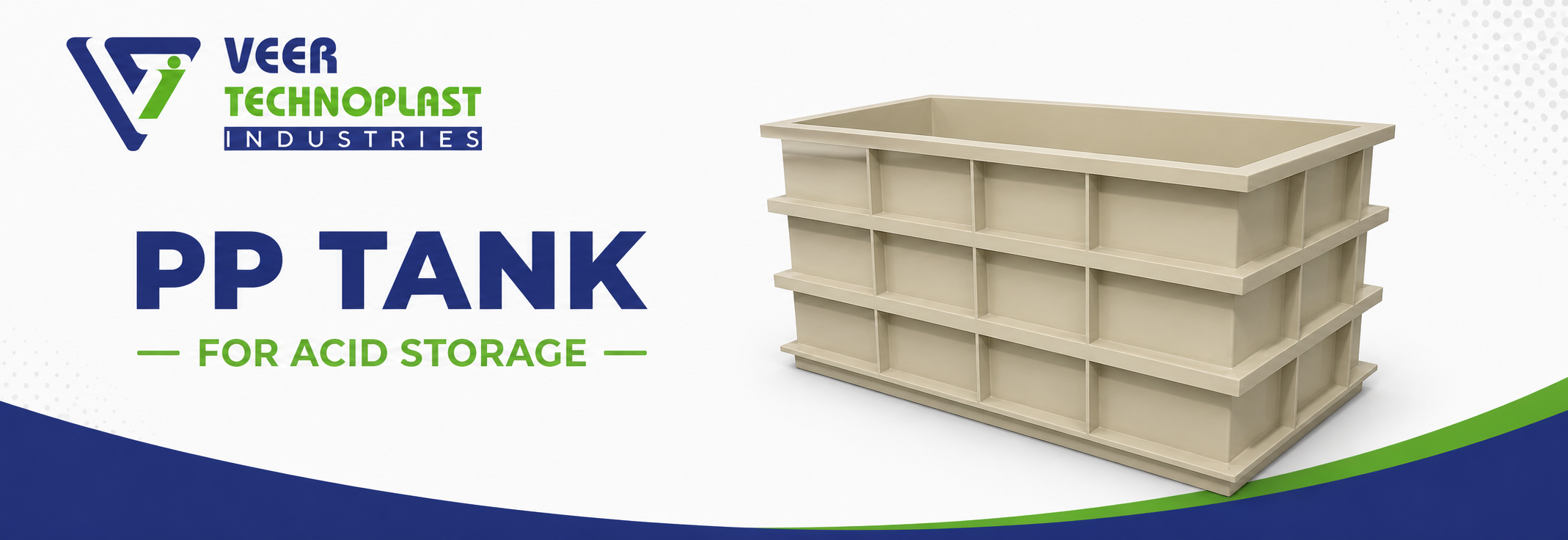
PP Tank for Acid Storage
Expertly engineered PP tanks for safe acid storage in Ahmedabad. Discover durable, corrosion-resistant solutions from Veer Technoplast Industries.
What is a PP Tank for Acid Storage? — Overview
A PP tank for acid storage is a specialized container fabricated from high-grade Polypropylene, a thermoplastic polymer renowned for its exceptional resistance to a wide spectrum of chemicals, including strong acids. These tanks are constructed using advanced fabrication techniques such as extrusion welding or sheet molding, ensuring a seamless, leak-proof, and structurally sound unit. Unlike metal tanks that corrode rapidly when exposed to acids, PP tanks maintain their integrity, preventing costly leaks and environmental contamination. They are designed to safely hold various concentrations and types of acids, serving as a vital component in many industrial processes.
Key Features and Technical Specifications
Veer Technoplast Industries engineers PP tanks for acid storage with a focus on performance and longevity. Our tanks are built to withstand the harshest industrial environments.
- Superior Chemical Resistance: Unaffected by most strong acids, alkalis, and solvents, ensuring product purity and tank integrity.
- Corrosion-Proof Construction: Eliminates the risk of rust and degradation common with metallic storage, leading to a longer service life.
- Leak-Proof Welded Joints: Utilizes high-strength fusion and extrusion welding techniques for robust, watertight seams.
- High Impact Strength: Designed to withstand physical stresses and impacts encountered in industrial settings.
- Smooth Internal Surface: Prevents residue buildup, facilitates easy cleaning, and ensures zero product contamination.
- Lightweight Design: Easier to transport, install, and relocate compared to heavier materials, reducing installation costs.
- Temperature Stability: Maintains structural integrity within a broad operating temperature range, typically from -10°C to +80°C.
- UV Stabilization: Available with UV-resistant additives for outdoor applications, preventing material degradation from sunlight.
Industrial Applications and Use Cases
The versatility of PP tanks makes them indispensable across numerous industrial applications in Ahmedabad and beyond, particularly for acid storage.
- Chemical Manufacturing: Storing concentrated acids like sulfuric, hydrochloric, and nitric acid used as raw materials or process intermediates.
- Pharmaceutical Production: Holding acidic solutions for synthesis, purification, or cleaning processes where purity is paramount.
- Textile and Dyeing Units: Storing acids used in dyeing, bleaching, and finishing processes, preventing corrosion of equipment.
- Metal Treatment and Electroplating: Containing acids for pickling, etching, and plating baths, ensuring a safe and contained environment.
- Water and Wastewater Treatment: Storing acids used for pH adjustment or chemical treatment in ETP and STP plants.
- Fertilizer and Agro-Chemicals: Safely storing acidic components used in the production or formulation of fertilizers and pesticides.
- Laboratory and Research Facilities: Providing reliable containment for acids used in various experimental and analytical procedures.
- Food Processing: Storing food-grade acids used in cleaning or processing, provided the specific PP grade meets food safety standards.
How to Choose the Right PP Tank for Acid Storage
Selecting the appropriate PP tank is crucial for ensuring safety, efficiency, and compliance. Consider these factors when making your choice.
- Acid Type and Concentration: Identify the specific acid(s) to be stored and their maximum concentration. This dictates the required chemical resistance of the PP grade.
- Storage Volume: Determine the total capacity needed, accounting for operational requirements and potential future expansion.
- Operating Temperature: Consider the ambient and process temperatures the tank will be exposed to, as this affects material performance.
- Environmental Conditions: Assess whether the tank will be installed indoors or outdoors, influencing the need for UV stabilization or external reinforcement.
- Regulatory Compliance: Ensure the tank meets all local and industry-specific safety and environmental regulations.
- Fittings and Accessories: Specify necessary inlets, outlets, vents, level indicators, and any required safety features.
- Supplier Expertise: Partner with a manufacturer experienced in fabricating tanks for corrosive applications, capable of providing technical support.
- Customization Needs: Evaluate if standard designs meet your requirements or if custom dimensions, shapes, or features are necessary.
Quality Standards and Compliance
For critical applications like acid storage, adherence to quality standards and regulatory compliance is non-negotiable. Veer Technoplast Industries manufactures PP tanks that align with stringent industry benchmarks. We ensure our materials are sourced from reputable suppliers and that fabrication processes meet established quality control protocols. While specific Indian Standards (IS) might not directly cover PP tank fabrication for all chemical applications, adherence to general principles of good manufacturing practice, material traceability, and robust welding standards is paramount.
Buyers should verify that the PP material used is of a high-grade, suitable for the specific chemicals being stored, and that the welding process is performed by certified technicians. Documentation regarding material certifications and fabrication quality checks provides assurance. For specialized applications, compliance with international standards like ISO for quality management systems is also a strong indicator of a manufacturer's commitment to quality.
Why Veer Technoplast Industries' Experience and Capability Matters
At Veer Technoplast Industries, our extensive experience in fabricating chemical-resistant storage solutions sets us apart. We understand the unique challenges of storing aggressive chemicals like acids. Our manufacturing facility in Ahmedabad is equipped with advanced machinery for precise fabrication, ensuring every tank meets rigorous quality standards. Our team comprises experienced engineers and technicians who possess deep knowledge of material science and fabrication techniques specific to polypropylene.
We pride ourselves on our meticulous quality control processes, from raw material inspection to final product testing. This ensures that each PP tank delivered is not only durable but also safe and reliable for its intended application. Our capability extends to offering customized solutions, working closely with clients to design tanks that precisely match their operational needs. We are committed to providing dependable products and comprehensive support, making us a trusted partner for your acid storage requirements in Ahmedabad.
Installation, Maintenance, and Care Tips
Proper installation and regular maintenance are key to maximizing the lifespan and safety of your PP acid storage tank.
Installation
- Foundation: Ensure the tank is placed on a level, stable, and adequately strong foundation that can support the full weight of the tank and its contents.
- Ventilation: If installed in an enclosed space, ensure adequate ventilation to prevent the buildup of any potentially hazardous fumes.
- Fittings: Connect all inlet, outlet, and vent lines carefully, ensuring secure and leak-proof connections. Avoid over-tightening threaded fittings.
- Grounding: For larger tanks or in areas with static electricity concerns, consider appropriate grounding measures.
Maintenance
- Regular Inspections: Periodically inspect the tank exterior and interior for any signs of wear, damage, or leakage, especially around welds and fittings.
- Cleaning: Clean the tank as needed using appropriate cleaning agents that are compatible with polypropylene. Avoid abrasive materials that could scratch the surface.
- Chemical Compatibility Checks: Periodically re-verify that the stored chemical is still compatible with the tank material, especially if process conditions change.
- Level Monitoring: Ensure level indicators are functioning correctly to prevent overfilling.
Care:
- Avoid Overfilling: Never fill the tank beyond its designated capacity.
- Protect from Physical Damage: Prevent impact from heavy machinery or falling objects that could compromise the tank's structural integrity.
- Temperature Limits: Do not expose the tank to temperatures exceeding its specified limits, as this can lead to deformation or failure.
Frequently Asked Questions
PP tanks are highly resistant to a wide range of acids, including sulfuric acid, hydrochloric acid, nitric acid, phosphoric acid, and acetic acid, across various concentrations. However, it's crucial to confirm compatibility for extremely aggressive or oxidizing acids at high temperatures.
Yes, PP tanks can be used outdoors. For prolonged exposure to sunlight, it is recommended to opt for UV-stabilized PP material to prevent degradation and maintain structural integrity over time.
With proper installation, regular maintenance, and correct chemical compatibility, a PP tank can offer a service life of 15-25 years or even longer, significantly outperforming many other materials in corrosive environments.
Minor damages, such as small cracks or punctures, can often be repaired using specialized welding techniques by experienced technicians. However, significant structural damage may necessitate replacement for safety reasons.
While both are polyolefins, HDPE (High-Density Polyethylene) generally offers better impact strength at lower temperatures and is more flexible. PP typically has higher temperature resistance and superior resistance to certain aggressive chemicals and solvents, making it often preferred for higher concentration acids and elevated temperatures.
Always consult the tank manufacturer with detailed information about the acid type, concentration, operating temperature, and any specific process requirements. Reputable manufacturers will guide you on material selection and tank design to ensure safety and compliance.
Conclusion
For industries in Ahmedabad and across Gujarat that handle acids, investing in high-quality PP tanks is a strategic decision that enhances safety, ensures operational continuity, and protects the environment. The inherent chemical resistance, durability, and low maintenance requirements of polypropylene make it an ideal material for these demanding applications. Veer Technoplast Industries is committed to providing robust, reliable, and customized PP tank solutions tailored to your specific needs. By understanding the critical factors of material selection, fabrication quality, and proper installation, you can ensure a safe and efficient acid storage system for years to come.
---
Get In Touch
Veer Technoplast Industries