
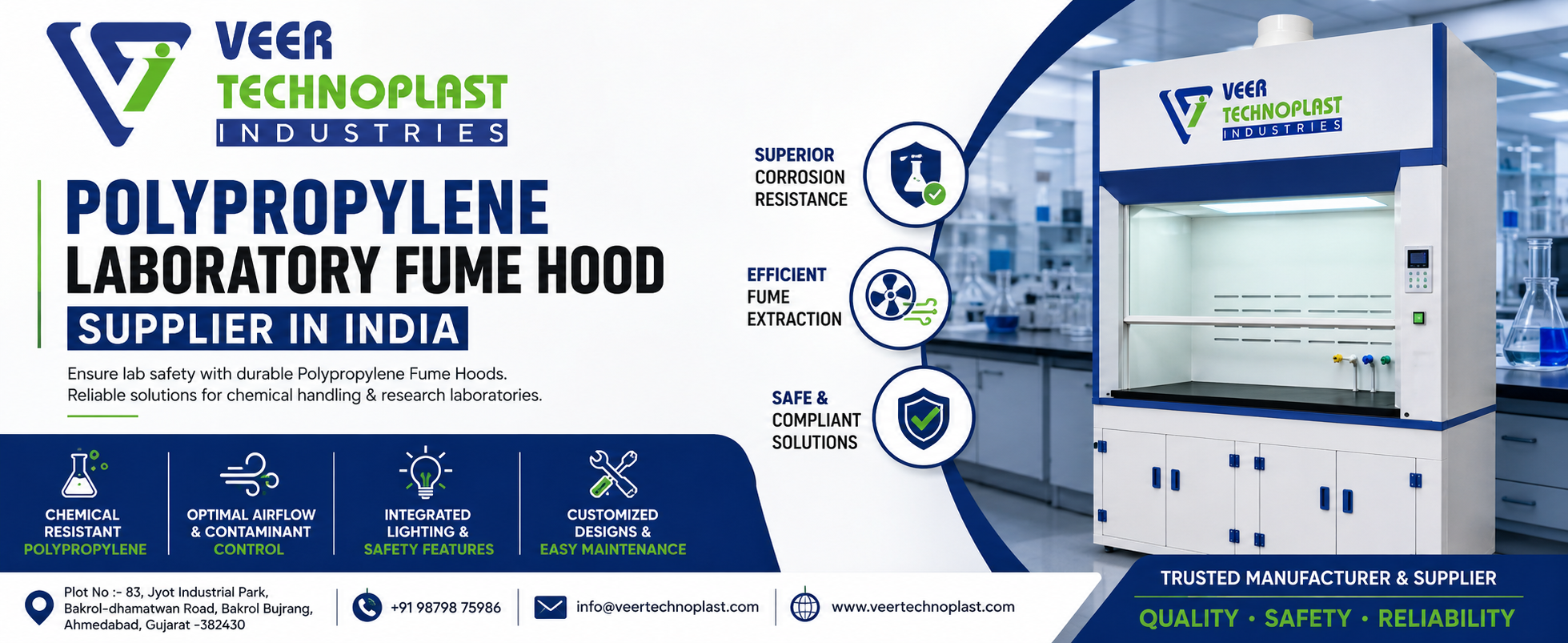
Polypropylene Laboratory Fume Hood supplier in india
Ensure lab safety with durable Polypropylene Laboratory Fume Hoods in India. Learn about features, applications, and choosing the right supplier for chemical re
WHY THIS MATTERS IN INDIA
India's rapidly expanding pharmaceutical, chemical, biotechnology, and educational sectors demand robust safety infrastructure. Cities like Ahmedabad, a significant industrial and pharmaceutical hub, host numerous laboratories that regularly engage with aggressive chemicals. The need for reliable fume extraction systems, particularly those constructed from corrosion-resistant materials like polypropylene, is paramount. Ensuring compliance with national and international safety standards is crucial for these industries to operate effectively and protect their workforce.
WHAT IS A POLYPROPYLENE LABORATORY FUME HOOD — OVERVIEW
A Polypropylene (PP) Laboratory Fume Hood is an enclosed workstation designed to ventilate hazardous fumes, vapors, and airborne particles generated during laboratory procedures. Unlike fume hoods made from other materials, PP construction offers superior resistance to a wide array of corrosive chemicals, acids, and alkalis. This makes them particularly suitable for environments where highly aggressive substances are routinely handled. The hood operates by drawing air from the laboratory into the enclosure, across the work surface, and then expelling it through a dedicated exhaust system, often after filtration.
KEY FEATURES AND TECHNICAL SPECIFICATIONS
- Corrosion-Resistant Polypropylene Construction: Provides exceptional durability against acids, alkalis, and solvents.
- Efficient Fume Extraction System: Engineered for consistent airflow and effective removal of hazardous vapors.
- Integrated Lighting System: Ensures clear visibility across the work surface for precise operations.
- Smooth, Non-Reactive Interior Surface: Facilitates easy cleaning and minimizes cross-contamination risks.
- Adjustable Sash Window: Allows for controlled access and optimizes face velocity for user safety.
- Airflow Monitoring and Alarm System: Provides real-time feedback on ventilation performance and alerts to potential issues.
- Ducted or Ductless Configuration Options: Adaptable to various laboratory layouts and ventilation requirements.
- Chemical-Resistant Work Surface: Typically made from PP, ceramic, or epoxy for enhanced durability.
INDUSTRIAL APPLICATIONS AND USE CASES
- Chemical Synthesis and Reactions: Safely handles experiments involving volatile organic compounds and strong acids.
- Pharmaceutical Research and Development: Essential for drug discovery, formulation, and quality control processes.
- Analytical Chemistry: Used for sample preparation, titration, and instrumental analysis involving hazardous reagents.
- Educational Laboratories: Provides a secure environment for student experiments in chemistry and biology.
- Metallurgical and Electroplating Industries: Manages fumes from acid pickling, anodizing, and other surface treatment processes.
- Biotechnology and Life Sciences: Offers containment for cell culture work or procedures generating bio-aerosols when equipped with appropriate filters.
- Quality Control Laboratories: Ensures precise and safe testing of materials and products across various industries.
HOW TO CHOOSE THE RIGHT POLYPROPYLENE FUME HOOD
Selecting the appropriate Polypropylene Laboratory Fume Hood requires careful consideration of several factors to ensure optimal safety and functionality. The right choice will align with specific laboratory needs, operational procedures, and regulatory compliance.
- Chemical Compatibility: Verify that the PP material and work surface are resistant to the specific chemicals used in your lab.
- Airflow Capacity and Type: Assess the required face velocity and whether a vertical or horizontal airflow design is suitable for your applications.
- Filtration Requirements: Determine if HEPA, activated carbon, or chemical-specific filters are necessary for your exhaust system.
- Size and Configuration: Choose dimensions that fit your laboratory space and accommodate the equipment used within the hood.
- Certifications and Standards: Confirm that the fume hood complies with relevant national and international safety standards, such as ASHRAE 110 or IS standards.
- Supplier Experience and Support: Evaluate the supplier's track record in manufacturing and installing lab safety equipment, including after-sales service.
- Customization Options: Consider if the supplier can integrate specific features like additional sinks, gas taps, electrical outlets, or custom shelving.
QUALITY STANDARDS AND COMPLIANCE
Adherence to stringent quality standards is non-negotiable for laboratory safety equipment. A Polypropylene Laboratory Fume Hood should be designed and manufactured in accordance with established industry benchmarks. Key standards often include ASHRAE 110 for fume hood performance testing, which evaluates containment efficiency. Compliance with local regulatory bodies and international quality management systems like ISO 9001 is also important. Buyers should always verify that the supplier can provide documentation for material specifications, performance testing, and relevant certifications to ensure the equipment meets safety and operational requirements.
WHY COMPANY EXPERIENCE AND CAPABILITY MATTERS
Choosing a supplier with proven experience in manufacturing Polypropylene Laboratory Fume Hoods is crucial for long-term reliability and safety. A company like Veer Technoplast Industries, with its background in industrial plastic fabrication, brings specific expertise to the design and construction of these critical safety units. Their capability extends to understanding the nuances of chemical resistance, airflow dynamics, and robust structural integrity required for laboratory environments. This includes precise manufacturing processes, rigorous quality control checks at every stage, and the ability to customize solutions to unique laboratory specifications. An experienced team ensures not only the initial quality of the product but also reliable delivery and comprehensive after-sales support, which is vital for maintaining operational continuity and safety standards.
INSTALLATION, MAINTENANCE AND CARE TIPS
Proper installation and routine maintenance are essential for the continuous safe operation of a Polypropylene Laboratory Fume Hood.
- Professional Installation: Always engage qualified technicians for installation to ensure correct ducting connections, electrical wiring, and airflow calibration.
- Initial Airflow Verification: After installation, conduct an airflow performance test to confirm the hood meets specified face velocity and containment standards.
- Regular Cleaning: Clean the interior surfaces with appropriate, non-abrasive cleaning agents compatible with polypropylene to prevent chemical buildup.
- Sash Management: Keep the sash at the lowest practical working height to optimize containment and minimize exposure.
- Filter Replacement: For ductless models or those with integrated filtration, replace filters according to manufacturer guidelines or as indicated by monitoring systems.
- Annual Certification: Schedule annual performance checks and certifications by qualified professionals to verify ongoing operational efficiency and safety.
- Avoid Overloading: Do not obstruct the baffles or overcrowd the work surface, as this can disrupt airflow patterns and compromise containment.
FREQUENTLY ASKED QUESTIONS
Polypropylene is highly valued for its exceptional resistance to a broad spectrum of corrosive chemicals, including strong acids, alkalis, and many organic solvents. This inherent chemical inertness ensures the fume hood's structural integrity and longevity, even in demanding laboratory environments where aggressive substances are routinely handled. Its smooth, non-porous surface also simplifies cleaning and minimizes the risk of chemical absorption or cross-contamination.
Ducted fume hoods connect to an external exhaust system, expelling contaminated air outside the building, making them ideal for handling highly toxic or odorous chemicals. Ductless fume hoods, on the other hand, filter the air internally using activated carbon or HEPA filters before recirculating it into the lab. Ductless models are suitable for less hazardous applications or where external ducting is impractical, but require regular filter replacement.
Face velocity refers to the speed at which air enters the fume hood opening. Maintaining an appropriate face velocity, typically between 80-120 feet per minute (FPM), is crucial for effective containment of hazardous fumes. If the face velocity is too low, fumes can escape into the lab; if too high, it can create turbulence that also allows fumes to escape. Regular monitoring ensures optimal safety.
Yes, polypropylene fume hoods are highly customizable to meet diverse laboratory requirements. Customization options often include specific dimensions, integrated sinks, gas taps, electrical outlets, reagent shelving, and specialized work surfaces. A capable supplier can design and fabricate a fume hood that perfectly integrates with existing lab infrastructure and supports unique experimental setups, enhancing both safety and operational efficiency.
Regular maintenance for a polypropylene fume hood includes daily cleaning of interior surfaces with compatible cleaning agents to prevent chemical residue buildup. It is also important to routinely check the sash operation and ensure airflow monitors are functioning correctly. Annual professional certification and performance testing are essential to verify that the fume hood continues to meet safety standards and operates effectively.
A fume hood protects laboratory personnel by creating a physical barrier and maintaining a negative pressure environment that draws hazardous fumes, vapors, and airborne particles away from the user. It effectively contains these contaminants within the hood's chamber and expels them through an exhaust system, preventing their release into the laboratory atmosphere. This minimizes inhalation exposure and reduces the risk of chemical splashes or spills.
Conclusion
Investing in a high-quality Polypropylene Laboratory Fume Hood is a foundational step towards ensuring a safe and compliant laboratory environment. For facilities across India, particularly in industrial centers like Ahmedabad, the chemical resistance and robust performance of PP fume hoods are indispensable. When selecting a supplier, prioritize those with demonstrated expertise in material science, manufacturing precision, and a commitment to comprehensive support. This approach ensures that your laboratory is equipped with reliable safety infrastructure, protecting personnel and enabling critical research and industrial processes to proceed without compromise.
Get In Touch
Veer Technoplast Industries