
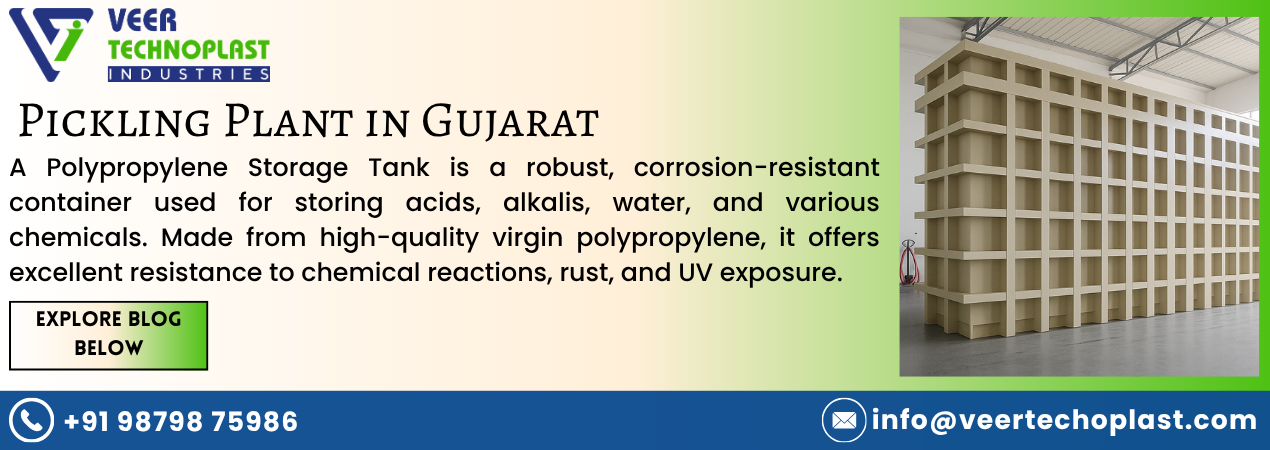

An important industrial solution used for metal surface cleaning, rust removal, oxide removal, scale removal, and pre-treatment before coating or finishing.
A pickling plant in Gujarat is an important industrial solution used for metal surface cleaning, rust removal, oxide removal, scale removal, and pre-treatment before coating or finishing. In industries where steel, stainless steel, wire, strip, pipe, tube, and fabricated metal components are processed, proper surface preparation directly affects product quality, coating adhesion, corrosion resistance, and final finish. Pickling helps clean metal surfaces by removing unwanted oxide layers, rust, mill scale, and surface impurities through a controlled chemical treatment process.
Gujarat has a strong industrial base with active manufacturing, fabrication, metal processing, galvanizing, electroplating, chemical processing, engineering, and infrastructure-related industries. Industrial areas across Ahmedabad, Vadodara, Surat, Rajkot, Vapi, Bharuch, Ankleshwar, Morbi, and nearby regions require dependable pickling systems for regular production and finishing operations. A well-designed pickling plant helps industries maintain consistent surface quality while improving process control and operational safety.
Veer Technoplast Industries is based in Ahmedabad, Gujarat, and works in industrial thermoplastic solutions such as PP tanks, HDPE tanks, PP/FRP storage tanks, PP/HDPE storage tanks, PVC/PVDF tanks, spiral tanks, blowers, ducting, anodizing tanks, plating tanks, fume scrubber systems, pickling tanks, wire pickling tanks, strip pickling tanks, and related process equipment. The company focuses on corrosion-resistant plastic fabrication for chemical handling, liquid storage, surface treatment, and industrial processing applications.
A pickling plant is an industrial system used to clean metal surfaces by treating them with suitable chemical solutions. The main purpose of this process is to remove rust, scale, oxide layers, oil traces, and other surface impurities before further treatment. After pickling, the metal surface becomes cleaner, smoother, and more suitable for galvanizing, electroplating, anodizing, powder coating, painting, passivation, or other finishing processes.
In many industries, untreated metal surfaces may contain oxide scale, rust patches, dust, or surface contamination. These impurities can affect coating quality, reduce adhesion, and lead to uneven finishing. A pickling plant helps solve this problem by preparing the metal surface in a controlled and systematic manner. This makes the process valuable for steel mills, wire drawing units, tube manufacturing plants, fabrication workshops, stainless-steel product manufacturers, and engineering industries.
Gujarat is one of India's key industrial states, with strong demand for metal treatment and chemical-resistant process equipment. Many industries in Gujarat use metal components that require surface cleaning before final finishing. Whether the requirement is wire pickling, strip pickling, pipe descaling, fabrication cleaning, or pre-treatment before coating, a properly designed pickling plant supports smoother workflow and better output consistency.
Industrial units in Gujarat often handle acidic and corrosive chemicals during surface treatment processes. For this reason, the construction material of tanks, ducts, scrubbers, and related process equipment is very important. Polypropylene and other thermoplastic materials are commonly used because they offer strong chemical resistance, non-corrosive performance, and long service life in suitable industrial conditions. PP-based pickling tanks and process systems help reduce corrosion-related issues compared to conventional metal tanks.
A pickling plant works through a planned surface treatment sequence. The exact process depends on the metal type, scale level, chemical solution, treatment time, and final application requirement. However, most pickling processes follow a practical step-by-step flow.
A pickling plant must be designed with proper attention to chemical resistance, process safety, handling convenience, maintenance needs, and long-term durability. Since pickling often involves acidic solutions, the use of suitable material is essential.
Pickling plants are used across different industrial sectors where metal cleaning and surface preparation are required. The application depends on the production process, material type, and finishing requirement.
In each application, the main goal remains the same: to prepare the metal surface properly so the next process can deliver better results.
Polypropylene tanks play an important role in many pickling plant setups because of their chemical resistance and non-corrosive nature. A PP pickling tank can be used for storing or processing suitable acidic solutions under controlled operating conditions. Compared to metal tanks, PP tanks do not rust and can offer better resistance against many corrosive chemicals used in industrial treatment processes.
PP tanks are also lightweight compared to metal alternatives, making installation and handling easier. Their leak-proof fabrication, proper welding, required wall thickness, and suitable accessories help support reliable performance. Accessories such as inlet and outlet nozzles, drain connections, vents, level indicators, and covers can be added based on process needs. For outdoor or demanding industrial conditions, design factors such as chemical type, temperature, capacity, installation method, and operating environment must be considered carefully.
A wire pickling plant is used in wire drawing and wire processing industries to clean wire surfaces before further operation. Wires often develop oxide scale or surface impurities during manufacturing, storage, or heat treatment. Pickling helps remove these unwanted layers and prepares the wire for drawing, coating, galvanizing, or other finishing processes.
In Gujarat, wire processing industries require consistent surface preparation to maintain quality and reduce process issues. A properly designed wire pickling tank and treatment system can help improve material cleanliness and support smoother downstream processing.
A strip pickling plant is used for cleaning metal strips before rolling, coating, plating, or finishing. Metal strips require uniform surface treatment because uneven cleaning can affect finish quality and product performance. Strip pickling systems are designed to handle continuous or batch-based treatment depending on production requirements.
Industries involved in steel strip processing, fabrication, and metal finishing benefit from strip pickling plants because they help maintain cleaner surfaces and better coating readiness. Proper tank sizing, chemical compatibility, fume handling, and rinsing arrangement are important for dependable performance.
Pickling operations may generate acidic fumes depending on the chemical process and operating conditions. For this reason, fume control is an important part of many pickling plant installations. Acid fume scrubber systems, ducting, hoods, and blowers may be required to collect and treat fumes before discharge.
Proper fume management helps improve workplace safety, protects surrounding equipment, and supports cleaner plant operation. PP/FRP blowers, PP/HDPE/FRP ducting, and acid fume scrubber systems are commonly used in such applications because they are suitable for corrosive industrial environments.
Choosing the right pickling plant in Gujarat requires a clear understanding of process needs and operating conditions. A plant should not be selected only by size; it should match the chemical, material, production, and safety requirements of the industry.
A properly selected system helps reduce process interruptions and supports better surface treatment results.
A well-designed pickling plant provides practical benefits for industries that depend on clean metal surfaces. It improves surface preparation, supports finishing quality, and helps make production more systematic.
These benefits make pickling plants useful for both small and large industrial units involved in metal processing and surface finishing.
Maintenance and safety are essential for the long-term performance of a pickling plant. Since chemical solutions are involved, regular inspection of tanks, joints, nozzles, ducts, scrubber connections, and drainage points is important. Any leakage, crack, blockage, or chemical residue buildup should be checked and corrected quickly.
Operators should follow proper handling practices, use suitable personal protective equipment, and maintain the correct chemical concentration as per process requirements. Ventilation and fume extraction systems should be kept functional where fumes are generated. Regular cleaning, proper waste handling, and safe chemical storage help maintain a better working environment and reduce operational risks.
When industries search for a pickling plant manufacturer in Gujarat, they usually look for a solution that fits their process, chemical use, space availability, and production requirement. A good pickling setup should combine proper material selection, practical design, corrosion resistance, and ease of operation.
Veer Technoplast Industries provides industrial thermoplastic products and process equipment used in chemical storage, surface treatment, plating, anodizing, pickling, fume control, ducting, and related applications. With products such as PP tanks, HDPE tanks, PP/FRP tanks, pickling tanks, wire pickling tanks, strip pickling tanks, blowers, ducting, and scrubber systems, the company supports industries that require corrosion-resistant solutions for demanding environments.
A pickling plant in Gujarat plays an important role in metal cleaning, surface preparation, rust removal, scale removal, and oxide treatment for many industrial sectors. For businesses involved in steel processing, wire drawing, pipe and tube manufacturing, fabrication, galvanizing, plating, and engineering applications, a reliable pickling system helps improve surface quality and supports better finishing results.
With Gujarat's strong industrial ecosystem, the demand for corrosion-resistant pickling tanks, PP process equipment, fume scrubber systems, and chemical-resistant plant components continues to grow. By selecting a properly designed pickling plant with suitable material, capacity, process flow, and safety features, industries can achieve cleaner metal surfaces, improved coating readiness, and more consistent production performance.
Veer Technoplast Industries manufactures durable, corrosion-resistant industrial tanks, scrubber systems, and advanced plastic engineering solutions.
2026 All Rights Reserved | Website by IndustryLead


