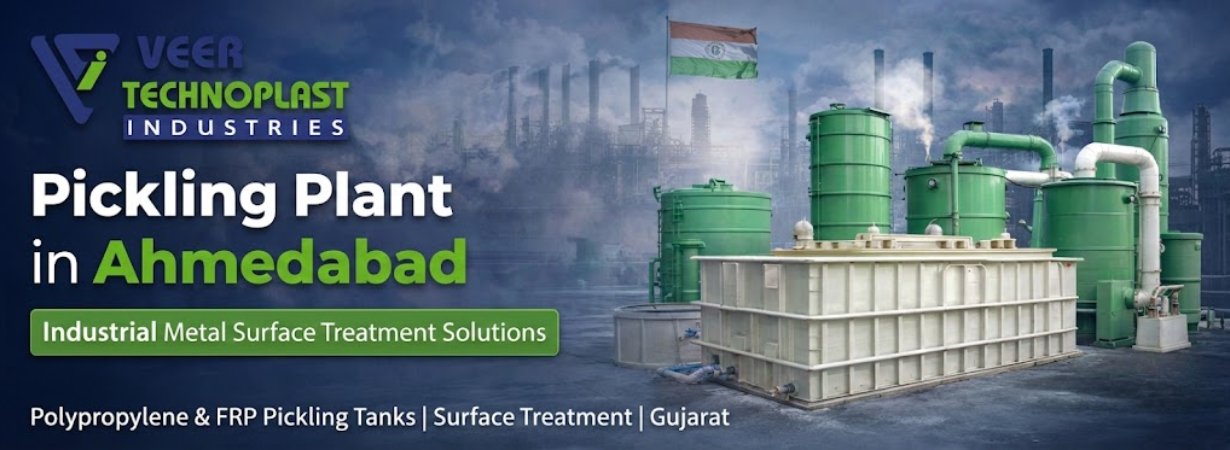
Pickling Plant in Ahmedabad - Industrial Metal Surface Treatment Solutions | Veer Technoplast Industries
Pickling Plant in Ahmedabad
Advanced Industrial Metal Surface Treatment Solutions for Chemical Processing and
Manufacturing Excellence
Industrial Metal Processing Excellence in Ahmedabad
Ahmedabad has developed into a prominent industrial center for metal processing, fabrication, and surface
treatment activities. Within this industrial ecosystem, pickling plants play a vital role in maintaining metal
quality, process consistency, and long-term performance. A pickling plant is a controlled system designed to
remove rust, scale, oxides, and surface contaminants from metal components before further processing. For
industries operating in and around Ahmedabad, a well-engineered pickling plant is essential for maintaining
consistent production standards and meeting regulatory requirements.
About Veer Technoplast Industries
Veer Technoplast Industries is an Ahmedabad-based manufacturer specializing in plastic process equipment and
corrosion-resistant storage solutions. The company designs and fabricates Polypropylene, HDPE, PVC, and FRP
tanks and systems for chemical, water, and industrial applications. With strong manufacturing expertise and a
focus on material integrity, Veer Technoplast Industries supports industries that operate in aggressive chemical
environments and require dependable process equipment.
Understanding the Role of a Pickling Plant in Industrial Operations
Pickling is a chemical surface treatment process in which metal parts are immersed in acid solutions to remove
unwanted layers formed during manufacturing, heat treatment, or storage. These layers typically include mill
scale, oxides, rust, and other impurities that can negatively impact coating adhesion, dimensional accuracy, and
corrosion resistance.
A pickling plant integrates multiple tanks, piping networks, fume control systems, and safety features to
ensure controlled chemical reactions and safe operation. In industrial clusters like Ahmedabad, where metal
fabrication and engineering activities are widespread, pickling plants are commonly used as part of
pre-treatment and surface preparation lines.
Industries rely on pickling plants not only for surface cleanliness but also to improve downstream process
efficiency. Properly pickled metal surfaces support better bonding during galvanizing, electroplating,
anodizing, powder coating, and painting operations.
Why Pickling Plants Are Widely Used in Ahmedabad's Industrial Sector
Ahmedabad and the surrounding regions of Gujarat host a high concentration of steel mills, fabrication units,
wire drawing plants, and engineering workshops. These industries frequently handle raw or semi-finished metal
products that require effective surface preparation before further processing.
The demand for pickling plants in Ahmedabad is driven by practical operational needs. The local industrial
environment prioritizes durable equipment capable of withstanding continuous chemical exposure. In addition,
industries operating in compliance-driven sectors such as automotive, pharmaceuticals, and export-oriented
manufacturing require consistent surface quality to meet international standards.
Plastic-based pickling plants, especially those manufactured from Polypropylene and FRP, are increasingly
preferred in Ahmedabad due to their corrosion resistance, reduced maintenance requirements, and longer service
life compared to conventional metal tanks.
Core Components of a Modern Pickling Plant
A pickling plant is a complete system composed of multiple integrated components designed to function safely
and efficiently. Each component contributes to the reliability and performance of the overall process.
Pickling tanks serve as the primary vessels where acid solutions react with metal parts. These tanks must be
chemically resistant, structurally sound, and leak-proof. Polypropylene and FRP are commonly used materials
because they remain stable when exposed to most industrial acids.
Rinse tanks follow the pickling stage and are used to remove residual acids from metal surfaces. Effective
rinsing helps prevent contamination of subsequent processes and minimizes chemical carryover.
Fume extraction and scrubber systems are essential for controlling acid fumes generated during pickling. These
systems protect personnel, maintain air quality, and support compliance with environmental regulations.
Piping and ducting systems connect various stages of the pickling line. These components must be compatible
with corrosive liquids and vapors to prevent leaks, blockages, or premature system failure.
Supporting accessories such as manholes, level indicators, inlet and outlet nozzles, vents, and drains
facilitate safe operation, inspection, and routine maintenance of the plant.
Material Selection for Pickling Plants in Chemical Environments
Material selection is a critical factor in pickling plant design. The acids commonly used in pickling,
including hydrochloric, sulfuric, and nitric acids, can rapidly degrade unsuitable materials.
Polypropylene is widely used for pickling tanks due to its strong resistance to acids, low moisture absorption,
and reliable mechanical properties. It performs well across a broad temperature range, making it suitable for
continuous industrial operation.
FRP, or Fiber Reinforced Plastic, provides additional structural strength and is often selected for larger
tanks or applications involving higher mechanical loads. FRP pickling plants are well suited for heavy-duty and
long-term industrial installations.
HDPE and PVC are also used in specific sections of pickling plants, depending on chemical compatibility and
operating conditions. Proper engineering ensures that each material performs effectively within its designated
function.
Industrial Applications of Pickling Plants
Pickling plants are widely used across multiple industries in Ahmedabad due to their essential role in metal
surface preparation. They are typically integrated into production lines where surface quality directly
influences product performance.
In steel mills and fabrication units, pickling removes mill scale and prepares steel surfaces for further
forming, machining, or coating. This improves surface finish and dimensional accuracy.
Wire drawing industries use pickling plants to clean metal wires before drawing, coating, or heat treatment.
Clean surfaces reduce tool wear and support consistent wire quality.
Pipe and tube manufacturing facilities rely on pickling plants to remove oxides formed during rolling or
welding processes. Effective pickling ensures uniform surfaces and improved corrosion resistance.
Automotive and engineering sectors use pickling as part of pre-treatment for components that undergo
plating, painting, or anodizing. Surface cleanliness is critical for adhesion and long-term durability.
Stainless steel product manufacturers use controlled pickling processes to achieve smooth,
contamination-free surfaces while protecting the base material from damage.
Environmental and Safety Considerations in Pickling Plant Design
Because pickling involves hazardous chemicals, environmental and safety considerations are central to plant
design. Modern pickling plants incorporate multiple features to reduce risks to workers and the surrounding
environment.
Acid fume scrubber systems capture and neutralize harmful vapors released during the pickling process. These
systems help control air pollution and protect operator health.
Leak-proof tank construction reduces the risk of accidental spills that could contaminate soil or groundwater.
Seamless welding, appropriate wall thickness, and quality fabrication practices are essential for long-term
safety.
Ventilation systems provide adequate air circulation within the plant area, lowering fume concentration and
improving working conditions.
Wastewater management is another important aspect of pickling operations. Rinse water and spent acids must be
treated properly before disposal to comply with environmental regulations.
In Ahmedabad and Gujarat, regulatory compliance requires industries to follow pollution control norms. A
well-designed pickling plant supports compliance while maintaining efficient and stable operations.
Choosing the Right Pickling Plant Manufacturer in Ahmedabad
Selecting a pickling plant manufacturer is a strategic decision that directly affects production reliability,
maintenance effort, and regulatory compliance. Industries should assess manufacturers based on technical
capability and practical experience.
Expertise in plastic fabrication and chemical equipment design is essential, as experienced manufacturers
understand material behavior under real operating conditions.
Customization capability is important because pickling requirements vary depending on metal type, production
volume, and available space. A flexible design approach ensures seamless integration into existing facilities.
Material quality and fabrication standards play a key role in determining service life. Proper welding
techniques, uniform wall thickness, and consistent quality control indicate a dependable manufacturing process.
A local manufacturing presence in Ahmedabad offers advantages such as easier communication, site coordination,
and responsive after-sales support.
Veer Technoplast Industries designs and manufactures plastic process equipment with a focus on durability and
chemical compatibility. Its Ahmedabad-based facility supports industries seeking pickling plant solutions
tailored to specific operational requirements.
Operational Benefits of a Well-Designed Pickling Plant
A properly engineered pickling plant delivers measurable operational advantages over time. Consistent surface
preparation helps reduce rejection rates and rework in downstream processes.
Improved coating adhesion results in longer-lasting finished products, particularly in corrosive or outdoor
environments.
Reduced maintenance downtime is achieved through the use of corrosion-resistant materials that withstand
chemical exposure without frequent repairs.
Enhanced workplace safety lowers the risk of accidents and supports better workforce productivity and
regulatory compliance.
Optimized chemical usage through effective tank design and process control helps industries manage
operational costs responsibly.
Integration of Pickling Plants into Existing Industrial Setups
In Ahmedabad's industrial zones, space constraints and process integration are common challenges. Modern
pickling plants are designed to fit within existing layouts while maintaining safe clearances and efficient
material flow.
Modular tank designs allow phased installation and future expansion as production volumes increase. Careful
planning helps minimize disruption during installation.
Coordination with fume scrubbers, ducting systems, and effluent treatment plants ensures that the pickling
process aligns with the overall facility infrastructure.
Engineering support during installation assists in proper alignment of tanks, piping, and safety systems,
reducing startup issues and enabling smooth commissioning.
Conclusion
A pickling plant is a fundamental component of metal processing operations, particularly in an industrial city
like Ahmedabad. Its role in surface preparation directly influences product quality, process efficiency, and
regulatory compliance. By using corrosion-resistant materials and well-engineered systems, industries can
achieve reliable performance and long-term operational stability.
Manufacturers with expertise in plastic process equipment contribute significantly to the effectiveness of
pickling plants. When designed and implemented correctly, a pickling plant supports cleaner production, safer
workplaces, and consistent industrial output, making it an essential asset for metal-based industries in
Gujarat.
Frequently Asked Questions
The primary purpose of a pickling plant is to remove rust, scale, and oxide layers from metal surfaces to
prepare them for further processing such as coating, plating, or fabrication.
Industries such as steel fabrication, wire drawing, pipe and tube manufacturing, automotive components, and
engineering workshops commonly use pickling plants in Ahmedabad.
Plastic pickling tanks made from Polypropylene or FRP offer superior corrosion resistance, lower maintenance
requirements, and longer service life in aggressive chemical environments.
Worker safety is supported through fume scrubber systems, proper ventilation, leak-proof tank construction,
and controlled handling of chemicals within the plant.
Pickling plants can be customized based on metal type, chemical usage, production volume, and available
installation space.
Environmental compliance is critical because pickling involves hazardous chemicals, and proper plant design
helps meet air emission and wastewater treatment regulations.