
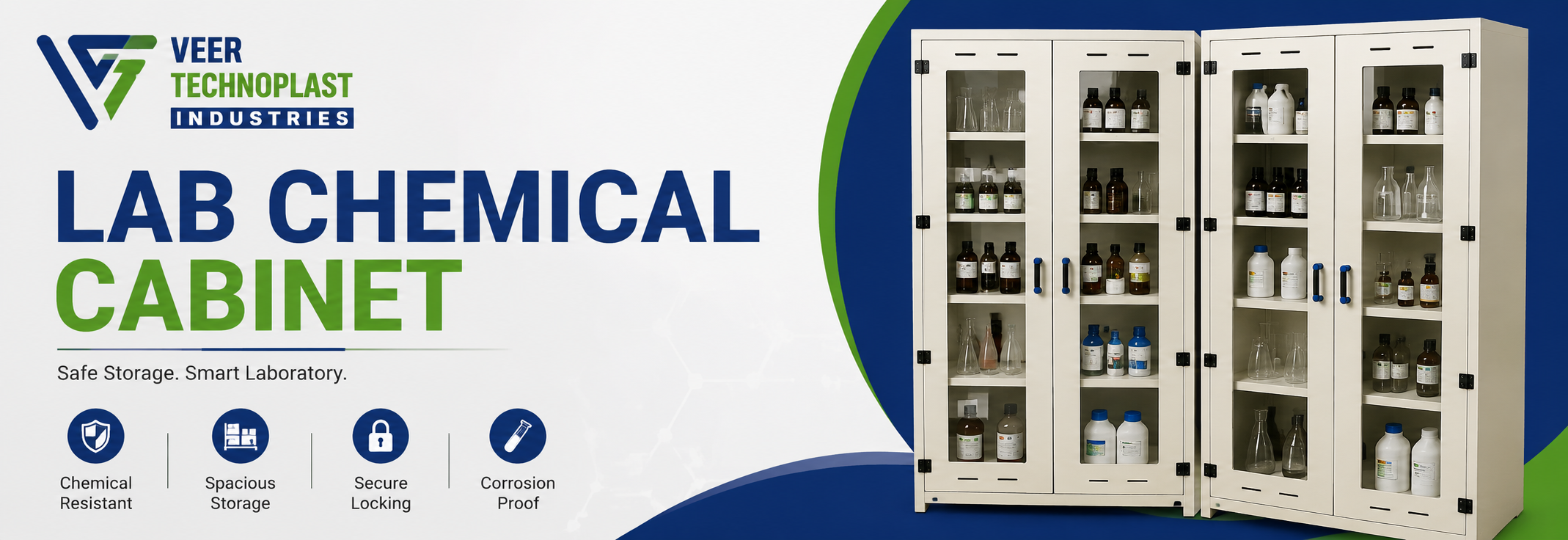
Lab Chemical Cabinet
Ensure laboratory safety with robust lab chemical cabinets from Veer Technoplast Industries in Ahmedabad. Discover durable PP, HDPE, PVC, and FRP storage soluti
Why This Matters in Ahmedabad, Gujarat
Ahmedabad, a prominent industrial and educational hub in Gujarat, hosts numerous pharmaceutical companies, chemical manufacturing units, research institutions, and educational laboratories. These sectors frequently work with corrosive, flammable, or toxic chemicals. The demand for reliable and compliant chemical storage solutions is consistently high to meet stringent safety regulations and protect personnel. Local manufacturing capabilities, like those offered by Veer Technoplast Industries, ensure that businesses can access tailored solutions that adhere to regional and national safety standards without extensive logistical challenges.
What Is a Lab Chemical Cabinet — Overview
A lab chemical cabinet is a specialized storage unit designed to safely contain and organize various types of chemicals, including acids, bases, solvents, and other hazardous materials. These cabinets are typically constructed from corrosion-resistant plastics such as Polypropylene (PP), High-Density Polyethylene (HDPE), Polyvinyl Chloride (PVC), or Fiber-Reinforced Plastic (FRP). Their primary function is to isolate chemicals, minimize exposure risks, prevent accidental spills, and often provide ventilation to manage fumes. They are essential for maintaining a controlled and safe laboratory or industrial environment.
Key Features and Technical Specifications
- Corrosion-Resistant Construction: Fabricated from PP, HDPE, PVC, or FRP to withstand aggressive chemical environments and prevent material degradation.
- Integrated Spill Containment: Features built-in sumps or removable spill trays to capture leaks and prevent hazardous liquid spread.
- Ventilation Ports: Designed with connection points for external ventilation systems to safely exhaust chemical fumes.
- Adjustable Shelving: Allows for flexible storage configurations to accommodate various container sizes and optimize internal space.
- Secure Locking Mechanisms: Equipped with robust locks to prevent unauthorized access and enhance security for hazardous substances.
- Chemical Compatibility Labeling: Clear internal and external labeling options to guide users on appropriate chemical storage categories.
- Robust Door Seals: Ensures a tight closure to minimize fume escape and enhance containment integrity.
Industrial Applications and Use Cases
- Pharmaceutical Research & Development: Storing reagents, solvents, and active pharmaceutical ingredients in controlled environments.
- Chemical Manufacturing Facilities: Organizing raw materials, intermediates, and finished product samples requiring secure containment.
- Quality Control Laboratories: Safely housing analytical standards, testing reagents, and samples for various industries.
- Educational Institutions: Providing secure storage for chemicals used in chemistry, biology, and physics laboratories.
- Water Treatment Plants: Storing water testing chemicals, disinfectants, and pH adjusters.
- Healthcare and Diagnostic Labs: Managing diagnostic reagents, stains, and hazardous waste materials.
- Textile and Dyeing Industries: Storing dyes, mordants, and processing chemicals.
How to Choose the Right Lab Chemical Cabinet
Selecting an appropriate lab chemical cabinet involves careful consideration of several factors to ensure safety and operational efficiency. The right choice protects personnel, preserves chemical integrity, and complies with safety regulations.
- Chemical Compatibility: Verify that the cabinet's construction material (PP, HDPE, PVC, FRP) is resistant to the specific chemicals intended for storage.
- Ventilation Requirements: Assess if the cabinet needs to be connected to an exhaust system for fume removal, especially for volatile chemicals.
- Storage Capacity and Dimensions: Determine the required internal volume and external footprint to fit the available space and chemical quantities.
- Safety Certifications: Look for cabinets that meet relevant industry safety standards and local regulatory requirements for hazardous material storage.
- Supplier Experience and Reputation: Choose a manufacturer with a proven track record in producing durable and compliant chemical storage solutions.
- Customization Options: Consider if standard sizes meet your needs or if custom dimensions, shelving, or ventilation features are necessary.
- After-Sales Support: Ensure the supplier offers reliable support for installation, maintenance, and any future modifications.
Quality Standards and Compliance
Adherence to quality standards is paramount for lab chemical cabinets, directly impacting safety and regulatory compliance. Buyers should verify that cabinets meet relevant industrial standards for material strength, chemical resistance, and structural integrity. While specific Indian standards like ISI or BIS might apply to certain components, general industry best practices often align with international norms for chemical storage. It is crucial to confirm that the manufacturing process follows recognized quality management systems, such as ISO certifications, to ensure consistent product quality. Additionally, understanding local environmental and occupational safety regulations, which dictate storage conditions for hazardous materials, is essential before selecting a supplier.
Why Veer Technoplast Industries' Experience and Capability Matters
Veer Technoplast Industries brings extensive experience in designing and fabricating high-quality plastic process equipment and storage solutions. Our expertise in working with Polypropylene (PP), HDPE, PVC, and FRP allows us to engineer lab chemical cabinets that offer superior corrosion resistance and structural durability. We focus on precision manufacturing, ensuring each cabinet meets stringent quality control parameters. Our technical team understands the complexities of chemical storage requirements, enabling us to provide customized solutions that align with specific laboratory needs, from unique dimensions to specialized ventilation integrations. This commitment to robust engineering and reliable delivery ensures that our clients receive products built for long-term performance and safety.
Installation, Maintenance and Care Tips
Proper installation and routine maintenance are crucial for the longevity and safe operation of any lab chemical cabinet.
Installation
Place the cabinet on a level, stable surface, away from direct heat sources or ignition points.
Ensure adequate clearance around the cabinet for ventilation and access.
Connect the cabinet's ventilation ports to a dedicated exhaust system, if applicable, following local safety codes.
Secure the cabinet to the floor or wall if required by safety regulations, especially in seismic zones.
Maintenance and Care:
Regularly inspect the cabinet for any signs of corrosion, cracks, or damage to the material.
Check door seals for integrity to ensure proper containment of fumes.
Clean spills immediately using appropriate personal protective equipment and neutralizing agents.
Wipe down interior and exterior surfaces with mild, compatible cleaning agents.
Verify that ventilation systems are functioning correctly and filters are clean, if present.
Ensure all chemicals are stored in compatible containers and properly labeled within the cabinet.
Periodically review the inventory to remove expired or unnecessary chemicals.
Frequently Asked Questions
Lab chemical cabinets are typically constructed from materials known for their chemical resistance. Common choices include Polypropylene (PP), High-Density Polyethylene (HDPE), Polyvinyl Chloride (PVC), and Fiber-Reinforced Plastic (FRP). These materials are selected based on their ability to withstand corrosive acids, bases, and solvents, ensuring the cabinet's structural integrity and preventing chemical degradation over time.
A chemical cabinet enhances laboratory safety by providing a secure, contained environment for hazardous materials. It prevents accidental spills through features like built-in sumps, minimizes exposure to fumes via ventilation ports, and restricts unauthorized access with secure locking mechanisms. This isolation of chemicals significantly reduces the risk of accidents, fires, and personnel exposure to dangerous substances.
Ventilation requirements for lab chemical cabinets depend on the volatility and toxicity of the chemicals stored. Many cabinets are designed with ports to connect to an external exhaust system, which draws fumes away from the cabinet and out of the laboratory. Proper ventilation is critical for volatile chemicals to prevent the buildup of hazardous concentrations within the cabinet and the lab environment.
Yes, lab chemical cabinets can often be customized to meet specific laboratory or industrial requirements. Customization options may include unique dimensions to fit tight spaces, specialized shelving configurations, integration with specific ventilation systems, or additional safety features. This flexibility ensures the cabinet perfectly aligns with the types and quantities of chemicals being stored and the operational workflow.
Lab chemical cabinets should be inspected regularly to ensure their continued integrity and safe operation. A visual inspection for signs of corrosion, damage, or wear should be conducted monthly. More thorough inspections, including checking door seals, locking mechanisms, and ventilation connections, are recommended quarterly or semi-annually, depending on the intensity of use and the nature of stored chemicals.
Specialized lab chemical cabinets are designed to store a wide range of hazardous chemicals. This includes corrosive acids like sulfuric and hydrochloric acid, strong bases such as sodium hydroxide, various organic solvents, and other toxic or flammable substances. The specific material of the cabinet dictates its compatibility with different chemical classes, making material selection a critical safety consideration.
Conclusion
The safe and compliant storage of chemicals is a non-negotiable aspect of any laboratory or industrial operation. Investing in a robust lab chemical cabinet, particularly those manufactured from durable materials like PP, HDPE, PVC, or FRP, is a foundational step towards ensuring personnel safety, environmental protection, and regulatory adherence. When selecting a cabinet, consider factors such as chemical compatibility, ventilation needs, and the proven expertise of the manufacturer. A reliable supplier like Veer Technoplast Industries, with a focus on quality and customization, can provide the essential solutions needed to manage hazardous materials responsibly and efficiently.
Get In Touch
Veer Technoplast Industries