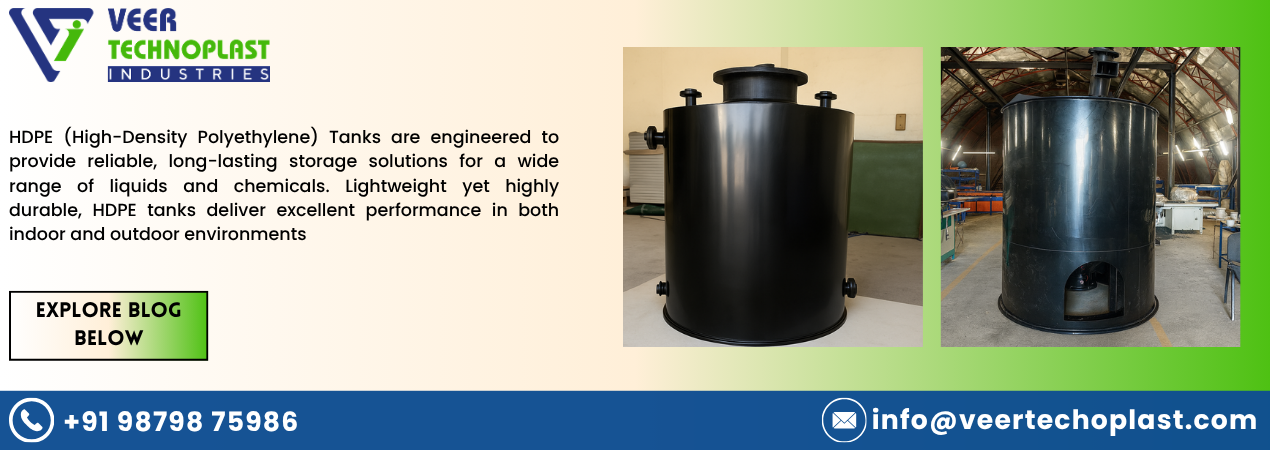
The demand for HDPE Tank in India has grown steadily as industries increasingly require safe, corrosion-resistant, and long-lasting storage solutions for chemicals, water, process liquids, and industrial applications.
Overview
With continued expansion across sectors such as chemicals, water treatment, textiles, pharmaceuticals, metal finishing, and mining, the need for dependable storage infrastructure has become critical for both process continuity and operational safety.
High-Density Polyethylene tanks are widely preferred because they combine lightweight construction with excellent structural strength and chemical resistance. Unlike conventional metal tanks, HDPE tanks provide non-corrosive performance, lower maintenance requirements, and extended service life, making them suitable for both indoor and outdoor industrial environments.
Across India, industries are increasingly shifting toward polymer-based storage systems capable of handling aggressive media while offering installation flexibility and lower lifecycle maintenance. This transition has made HDPE tanks a vital part of modern industrial fluid handling and storage infrastructure.
Technology
An HDPE tank is manufactured using high-density polyethylene, a material known for toughness, impact resistance, and broad chemical compatibility. These tanks are used for storing acids, alkalis, solvents, water, effluents, and various process liquids where corrosion resistance is essential.
Depending on the application, HDPE tanks may be produced through rotational molding, butt fusion fabrication, or spiral-wound construction. Each manufacturing method supports specific capacity ranges, wall thickness requirements, and operating conditions.
The construction of HDPE tanks enables resistance to rust, chemical attack, and environmental exposure, which is why they are widely used in demanding industrial conditions. Their seamless or engineered welded designs also contribute to leak prevention and long-term performance reliability.

Market Growth
Industrial growth across India has increased demand for storage systems capable of safely handling aggressive chemicals, utility fluids, and process liquids without contamination or structural deterioration.
Chemical processing industries require reliable containment for corrosive substances. Water treatment facilities need storage compatible with treatment chemicals and process water. Manufacturing sectors increasingly seek solutions that reduce maintenance downtime while improving operational reliability.
HDPE tanks meet these requirements through material durability, chemical compatibility, and flexible fabrication options. Their growing adoption reflects a broader industrial preference for efficient and long-life storage technologies.
Key Features
HDPE tanks are widely used because of several performance-oriented features:
These features make HDPE tanks suitable for industries where storage reliability directly impacts safety and productivity.
Applications
HDPE tanks serve a wide range of industrial applications because of their chemical resistance and process adaptability.
Chemical Storage Applications
Industries handling acids, alkalis, solvents, and process chemicals use HDPE tanks for safe containment. Their non-corrosive properties make them especially suitable where metallic alternatives may degrade over time.
Water Treatment Systems
In RO plants, ETP systems, STP projects, and utility water treatment applications, HDPE tanks are widely used for storing dosing chemicals, raw water, and treated water.
Process Industries
Chemical processing facilities often use these tanks for batching, mixing, and reaction support where compatibility with stored media is essential.
Textile and Surface Treatment Sectors
Textile processing, dyeing operations, electroplating, and pickling applications depend on HDPE tanks for chemical handling because of their resistance to corrosive process solutions.
Mining and Mineral Processing
Mining operations use durable HDPE storage tanks for slurry additives, reagents, and process solutions where both structural strength and chemical resistance are required.
Types
Different industrial applications require different tank configurations. Commonly used designs include:
Selection Guide
Choosing the right HDPE tank involves more than capacity alone. Several technical factors influence long-term suitability and performance.
Chemical compatibility is a primary consideration, as the stored media affects material grade selection and wall thickness requirements.
Operating temperature is equally important, particularly in chemical applications involving fluctuating process conditions.
Capacity and dimensional requirements should align with plant layout constraints and storage volume needs.
Accessory integration, including nozzles, level indicators, venting systems, and inspection openings, may also be essential depending on process requirements.
Evaluating these factors carefully helps ensure the selected tank meets both operational and safety expectations.
Advantages
Many industries prefer HDPE tanks over traditional metallic storage systems because of both practical and performance advantages.
Metal tanks can face corrosion challenges when exposed to aggressive chemicals. HDPE tanks help eliminate these concerns while reducing maintenance intervention.
Their lightweight construction simplifies transport and installation, particularly in larger industrial systems.
Because HDPE does not rust, require protective coatings, or experience typical metal deterioration, long-term ownership and maintenance costs can often be reduced.
This combination of performance reliability and maintenance efficiency continues to support wider industrial adoption.
Market Drivers
The growing use of HDPE Tank in India is closely linked to expansion across multiple industrial sectors.
Growth in chemical manufacturing has increased demand for corrosion-resistant storage systems.
Expansion in water treatment infrastructure has generated consistent demand for utility and process storage tanks.
Environmental compliance requirements have encouraged industries to invest in reliable storage solutions for effluent treatment and chemical handling.
Manufacturing modernization has also supported the adoption of customized polymer tanks for integrated process applications.
Together, these factors continue to strengthen the market relevance of HDPE tanks across India.
Maintenance
Although HDPE tanks are known for low maintenance, proper handling practices contribute significantly to long service life.
Routine inspection of fittings, nozzles, and connections helps maintain consistent performance.
Stored chemical compatibility should always be verified for the intended application.
Support structures and installation conditions should align with design recommendations, particularly for large-capacity tanks.
Periodic visual inspections and process-based maintenance checks help ensure continued reliability in industrial service.
Conclusion
HDPE Tank in India has become an important solution for industries requiring safe, durable, and corrosion-resistant liquid storage systems. From chemical processing and water treatment to mining and industrial manufacturing, these tanks support a broad range of demanding applications.
Their material strength, chemical compatibility, low maintenance requirements, and configuration flexibility make them well suited to modern industrial storage needs. As industries continue focusing on reliability, process safety, and long-term operational efficiency, HDPE tanks remain a practical and widely adopted storage solution.
FAQ
Get In Touch
Relevant Tags
Veer Technoplast Industries manufactures durable, corrosion-resistant industrial tanks, scrubber systems, and advanced plastic engineering solutions.
2026 All Rights Reserved | Website by IndustryLead