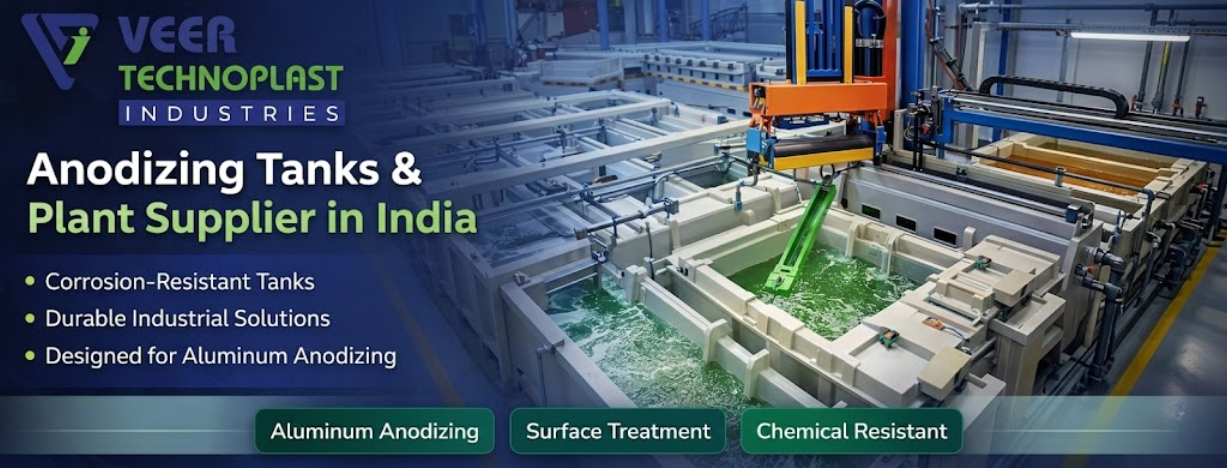
Anodizing Tanks & Plant Supplier in India | Veer Technoplast Industries
Industrial Surface Treatment Equipment
Anodizing Tanks & Plant Supplier in India
Veer Technoplast Industries — corrosion-resistant polypropylene anodizing
systems for aluminum surface treatment industries across India.
Overview
Anodizing Tanks & Plant Supplier in India
Anodizing is a widely used electrochemical process that enhances the
surface properties of aluminum components. Industries that manufacture or process aluminum parts often require
durable surface treatments that improve corrosion resistance, surface hardness, and appearance. Anodizing tanks
and plant systems play a critical role in this process by creating controlled chemical environments where
aluminum components undergo surface oxidation treatment.
An anodizing tanks and plant supplier in India designs and manufactures
specialized systems used for aluminum anodizing processes in industrial environments. These systems typically
include chemical tanks, process tanks, rinsing tanks, electrical systems, and chemical circulation equipment
required for the anodizing process. The tanks used in these systems must withstand exposure to acids, alkalis,
and various chemical solutions used during metal surface treatment operations.
Manufacturers such as Veer Technoplast Industries develop anodizing
tanks using corrosion-resistant materials such as polypropylene or PP-H sheets. These materials provide
long-term durability, chemical stability, and structural strength, making them suitable for demanding industrial
metal finishing applications.
Technology
Understanding Anodizing Tanks and Plant Technology
An anodizing tank is a specialized chemical processing tank used in
anodizing plants where aluminum components are immersed in electrolytic solutions. During the process,
electrical current is passed through the solution, which forms a controlled oxide layer on the surface of the
aluminum.
This oxide layer improves the aluminum's resistance to corrosion,
increases surface hardness, and enables the metal surface to retain dyes or protective coatings. Because the
anodizing process involves aggressive chemicals such as sulfuric acid and requires stable temperature control,
the tanks used in anodizing plants must provide high chemical resistance and structural reliability.
Polypropylene tanks are widely used in anodizing plants because
polypropylene offers excellent resistance to corrosive chemicals and industrial operating conditions.
Fabrication methods such as butt-fusion welding and hot-gas extrusion welding ensure strong joints, leakproof
construction, and long-term operational performance.
Industrial anodizing plants typically include multiple tanks designed to
support different stages of the process. These stages include cleaning, rinsing, anodizing, coloring, sealing,
and chemical treatment.
Components
Key Components of an Industrial Anodizing Plant
An anodizing plant consists of several integrated components that work
together to carry out the aluminum surface treatment process efficiently. Each section of the plant is designed
to maintain proper chemical balance, electrical conductivity, and consistent process control.
Typical components included in anodizing tanks and plant systems are:
Chemical process tanks used for anodizing reactions
Rinse tanks for washing components between process stages
Chemical storage tanks for acids and treatment chemicals
Rectifiers and electrical systems required for anodizing current
Circulation pumps for chemical movement and filtration
Fume extraction or scrubber systems for chemical vapor control
Structural frameworks and lifting mechanisms for component handling
These integrated systems help maintain consistent anodizing quality
while supporting safe and efficient operations within industrial metal finishing facilities.
Materials
Material Construction Used in Anodizing Tanks
The materials used in the construction of anodizing tanks are extremely
important because these tanks are continuously exposed to strong chemical solutions and demanding industrial
conditions. Polypropylene is one of the most widely used materials for these tanks due to its chemical stability
and mechanical strength.
Polypropylene tanks used in anodizing plants are fabricated using
high-grade PP or PP-H sheets. These sheets are welded together using specialized fabrication techniques that
ensure strong joints and leakproof construction.
Important characteristics of polypropylene anodizing tanks include
resistance to acids and alkalis, long operational life, lightweight construction, and strong corrosion
resistance. Compared with traditional metal tanks, polypropylene tanks require significantly less maintenance
and are less likely to degrade due to chemical exposure.
Because polypropylene materials are chemically inert and often
UV-stabilized, these tanks are suitable for both indoor and outdoor industrial environments.
Applications
Industrial Applications of Anodizing Tanks and Plants
Anodizing tanks and plant systems are used across many industries where
aluminum components require protective surface treatment. The anodizing process enhances durability, corrosion
resistance, and the visual appearance of aluminum parts used in various engineering sectors.
Common industrial applications include:
Aluminum surface treatment for corrosion protection
Automotive component anodizing for trims and engine parts
Aerospace aluminum treatment for structural components
Architectural aluminum finishing for building profiles
Electrical equipment anodizing for enclosures and heat sinks
Consumer product manufacturing involving aluminum parts
Metal finishing plants requiring anodized coatings
These applications highlight the importance of reliable anodizing plant
equipment in industries that depend on long-lasting aluminum components.
Advantages
Advantages of Polypropylene Anodizing Tanks
Polypropylene anodizing tanks provide several technical advantages that
make them suitable for industrial metal finishing processes. Their chemical resistance and structural stability
help maintain process consistency even in demanding operating environments.
Key advantages include:
High resistance to acids and corrosive chemical solutions
Leakproof tank construction using advanced welding techniques
Lightweight structure allowing easier installation and relocation
Long service life with minimal corrosion risk
Compatibility with industrial anodizing chemicals
Low maintenance requirements compared to metal tanks
Flexible design options for vertical, horizontal, or rectangular tanks
These advantages make polypropylene tanks a practical and reliable
solution for anodizing plants operating continuously in chemical processing environments.
Market Demand
Industrial Demand for Anodizing Tanks in India
The demand for anodizing tanks and plant systems in India has increased
significantly with the expansion of aluminum processing industries. Manufacturing sectors such as automotive
production, architectural fabrication, electronics manufacturing, and aerospace component production rely
heavily on anodized aluminum components.
Industrial clusters across the country require specialized anodizing
plant equipment capable of supporting high-volume aluminum finishing operations. The availability of
corrosion-resistant chemical tanks plays an important role in ensuring consistent anodizing quality and
long-term plant reliability.
As aluminum continues to replace heavier metals in many engineering
applications, the need for efficient anodizing infrastructure has become increasingly important for
manufacturers seeking durable surface finishing solutions.
Supplier Selection
Selecting the Right Anodizing Tanks and Plant Supplier
Choosing the right anodizing tanks and plant supplier requires careful
evaluation of engineering design, material quality, fabrication methods, and compatibility with industrial
processes. Industrial buyers often assess suppliers based on technical expertise, manufacturing standards, and
experience in chemical process equipment production.
When evaluating anodizing plant suppliers, buyers typically consider
factors such as:
Material quality used in tank fabrication
Chemical resistance and structural strength of tanks
Manufacturing techniques such as butt-fusion welding
Customization capability for plant layout and tank dimensions
Compatibility with industrial anodizing processes
Long-term durability in corrosive operating environments
These considerations help industries ensure that their anodizing plant
equipment performs reliably under demanding operational conditions.
Maintenance
Maintenance and Operational Considerations for Anodizing Tanks
Proper maintenance practices are important for ensuring the long-term
performance of anodizing tanks and plant systems. Although polypropylene tanks provide strong resistance to
corrosion, regular inspection and preventive maintenance help maintain process efficiency.
Maintenance procedures typically include inspecting tank surfaces,
checking welded joints for structural integrity, monitoring chemical concentrations, and ensuring that
temperature and electrical parameters remain within recommended operating ranges.
Industrial operators also ensure that associated systems such as
chemical circulation pumps, filtration units, and ventilation systems function properly. These practices
contribute to consistent anodizing quality and help extend the overall lifespan of the equipment.
Future Outlook
Future Outlook for Anodizing Plant Technology
As manufacturing industries increasingly adopt lightweight aluminum
components, the importance of anodizing technology is expected to continue growing. Surface finishing
technologies play a crucial role in improving product durability, corrosion resistance, and aesthetic quality.
Modern anodizing plants are being designed with improved process
control, automation capabilities, and environmentally responsible chemical handling systems. Advances in tank
fabrication techniques and improved material quality are also contributing to longer equipment life and improved
operational efficiency.
The continued development of anodizing plant technology will support
industries that depend on high-performance aluminum components across sectors such as transportation,
electronics, construction, and industrial engineering.
Conclusion
Conclusion
Anodizing tanks and plant systems are essential equipment in industries
that rely on aluminum surface treatment processes. These systems provide controlled environments where aluminum
components undergo electrochemical treatment to improve durability, corrosion resistance, and surface
performance.
Polypropylene-based anodizing tanks provide a reliable solution for
industrial anodizing operations due to their chemical resistance, structural strength, and long-term durability.
As aluminum applications continue to expand across multiple industries, the demand for well-designed anodizing
plant equipment will remain an important part of modern manufacturing infrastructure.
FAQ
Frequently Asked Questions
Answers based on provided content only
Anodizing tanks are used in aluminum surface treatment processes where
aluminum components are immersed in chemical electrolytes to form a controlled oxide layer on the metal
surface. This process improves corrosion resistance, surface hardness, and durability of aluminum products
used in various industries.
Polypropylene tanks are widely used in anodizing plants because they
offer strong resistance to the corrosive chemicals involved in the anodizing process. Their lightweight
structure, chemical stability, and leakproof welded construction make them suitable for long-term industrial
use.
Industries such as automotive manufacturing, aerospace engineering,
architectural aluminum fabrication, electronics production, metal finishing plants, and precision
engineering sectors commonly use anodizing plant equipment for aluminum surface treatment.
Anodizing plants create a protective oxide layer on aluminum surfaces
through an electrochemical process. This oxide layer enhances corrosion resistance, increases surface
hardness, improves wear resistance, and helps aluminum components maintain durability in challenging
environments.
The performance of anodizing tanks depends on material quality,
chemical resistance, fabrication techniques, tank thickness, operating temperature conditions, and proper
maintenance practices. Tanks constructed using high-grade polypropylene and advanced welding methods
generally offer longer service life.
Yes, anodizing tanks can be customized according to industrial process
requirements. Manufacturers often provide tanks in different shapes, sizes, and configurations, along with
fittings such as nozzles, manholes, and level indicators to support specific anodizing plant layouts.